How to Stop Losing Track of Time with ADHD (And Actually Stay on Schedule)
Introduction If you are struggling to stop losing track of time with ADHD you are not alone and you are not broken….

Introduction
If you are struggling to stop losing track of time with ADHD you are not alone and you are not broken. You told yourself you had plenty of time. You sat down for just a minute. Then somehow two hours evaporated and you have no idea where they went.
If this sounds painfully familiar, you are not disorganized or irresponsible. You have ADHD, and what you are experiencing has a real name: time blindness. It is one of the most frustrating, and least talked about symptoms of ADHD, and it affects nearly every area of your life.
For people with ADHD, time does not feel like a steady, measurable thing. It tends to feel like two states: right now and not right now. Deadlines that are an hour away feel abstract. A task you started “a few minutes ago” was actually 90 minutes. This is not a willpower problem, it is a neurological difference in how the ADHD brain perceives and tracks time.
The good news? You can build systems that work with your brain instead of against it. This guide walks you through 9 practical, proven strategies to help you stop losing track of time with ADHD, no willpower lectures, no guilt, just tools that actually help.
Why This Matters for ADHD
Most time management advice assumes you can feel time passing. Planners, calendars, and to-do lists all rely on a built-in sense of urgency and duration that many ADHD brains simply do not have in the same way neurotypical brains do.
Dr. Russell Barkley, one of the world’s leading ADHD researchers, describes time blindness as one of the most impairing aspects of ADHD. The ADHD brain struggles to mentally project itself forward and backward in time which is why “future you” doesn’t feel real enough to motivate “present you.”
This creates a specific set of problems:
- You consistently underestimate how long tasks take.
- You lose hours in hyperfocus without realizing time has passed.
- Transitions between activities feel almost impossible.
- You chronically run late even when you genuinely try not to.
- Deadlines sneak up on you despite knowing about them for weeks.
The strategies below are designed to create an external time structure, because when your internal clock is unreliable, the solution is to build one outside your head.
9 Strategies to Stop Losing Track of Time with ADHD
1. Make Time Visible, Literally
The single most effective shift you can make is replacing abstract time with visual time. A standard digital clock shows you what time it is. It does not show you how much time is passing or how much you have left. For the ADHD brain, that distinction is everything.
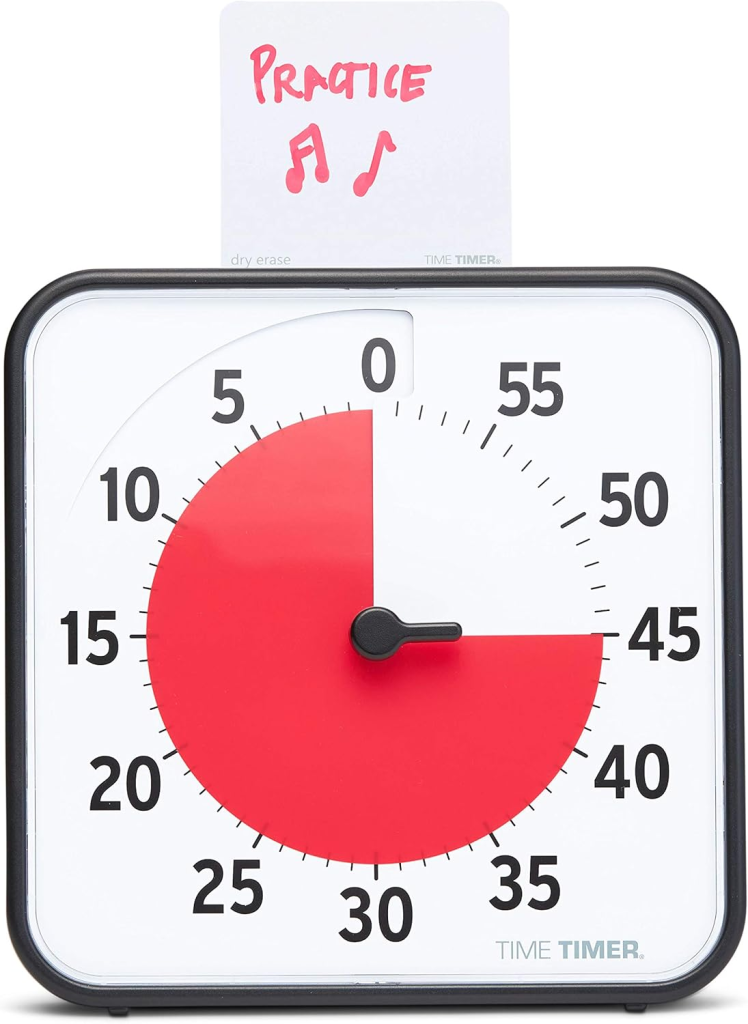
The Time Timer is the gold-standard tool for this. It shows a red disk that physically shrinks as time runs out, giving you a real-time visual of time disappearing. Many ADHD adults and coaches swear by it for work blocks, transitions, and even daily routines.
An analog clock on the wall can also help far more than a digital one, you can literally see the minute hand moving. Combine that with a visual timer and you give your brain constant, low-effort time feedback.
Try this: Put a Time Timer or analog clock in every room where you commonly lose track of time, your desk, the kitchen, the bathroom.
2. Set Layered Alarms, Not Just One
Most people set a single alarm for when something needs to happen. For ADHD brains, this rarely works, by the time the alarm fires, it’s already too late to transition smoothly.
Layered alarms create a runway. Think of them the same way an airline calls boarding in stages, you don’t just hear “the plane is leaving,” you hear “30 minutes, 15 minutes, now boarding.”
Set alarms at:
- 30 minutes before a task, meeting, or appointment
- 10 minutes before (start wrapping up)
- 5 minutes before (begin the transition)
- At the time of the event itself
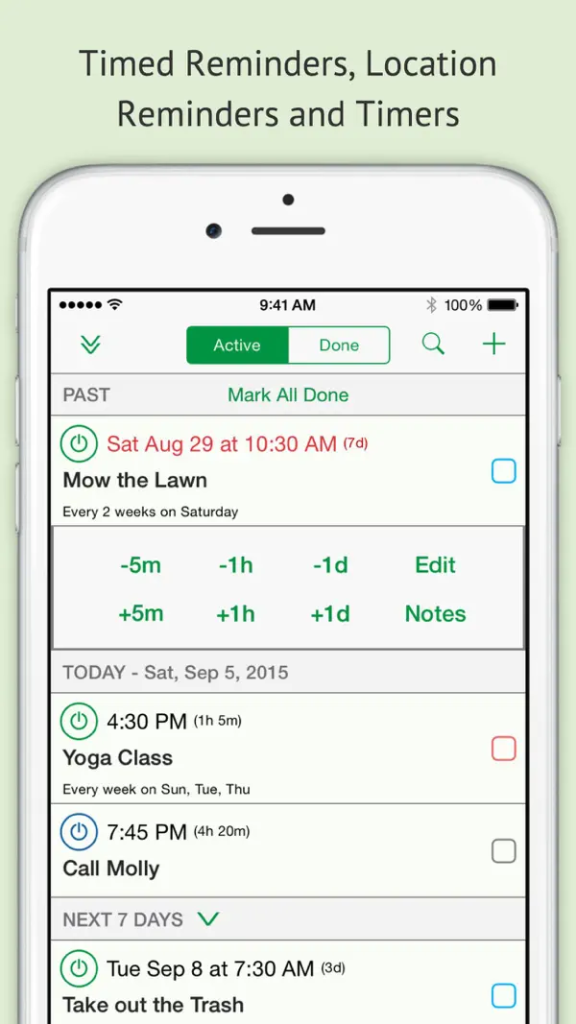
Use your phone, a smartwatch, or a dedicated app like Alarmed to set this up quickly. Giving each alarm a descriptive label such as “Start getting ready for meeting” is infinitely more useful than a generic buzzing sound.
3. Use Time Blocking to Make Your Day Concrete
An unstructured day is a disaster when it comes to time blindness. Without visible chunks, time becomes an open, featureless space and ADHD thrives in open space in the worst way. Time blocking means assigning every hour of your day to a specific task or type of activity before the day starts. Not a wish list, an actual map.
How to do it:
- Each morning (or the night before), open your calendar
- Block every hour from when you wake up to when you stop working
- Assign tasks to specific blocks, be realistic about how long things take
- Add buffer blocks between tasks for transitions (ADHD transitions are real and they take time)
Google Calendar and Notion both work well for this. If you want a deeper guide on how to use time blocking specifically with an ADHD brain check out how to use time blocking if you have ADHD and our roundup of the best time blocking apps for ADHD professionals. If you prefer paper, the Full Focus Planner has a daily time-blocking layout built in. The key is not to follow the blocks perfectly, it is to have a structure that you can look at and reorient from when you drift.
4. Use the “Time Tax” Rule to Estimate Accurately
Here is the hard truth: ADHD brains almost always underestimate how long things take. If you think a task will take 20 minutes, it probably takes 40. If you think you need an hour to get ready, you likely need 90 minutes. This is called planning fallacy, and it hits people with ADHD especially hard.
The fix: add a time tax to every estimate.
Take whatever time you think a task will take and multiply it by 1.5, or simply double it until you have a track record. This single adjustment can dramatically reduce how often you are late or caught off guard.
Also build in “transition time” as a real scheduled item, 10-15 minutes between tasks to close one thing down, use the bathroom, refill your water, and mentally shift gears. These transitions are not wasted time. They are what keeps the rest of your day from collapsing.
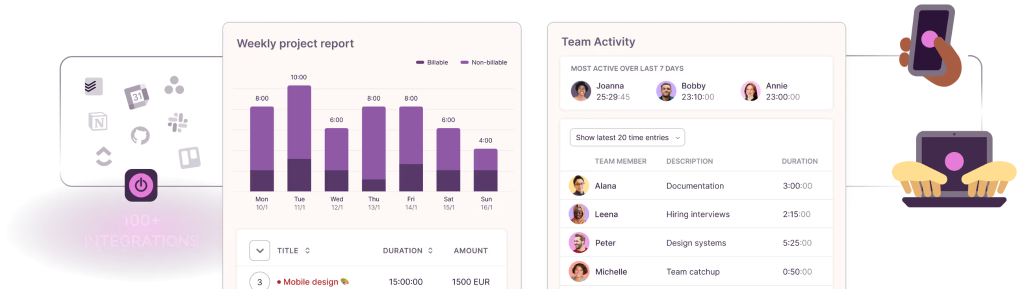
If you are not sure what your real time tax actually is, track your tasks for one week with Toggl Track. It runs quietly in the background and shows you exactly how long things took versus how long you thought they would. Most people are genuinely surprised by the data and that surprise is what makes the time tax rule finally click. For more on building realistic time awareness check out our full guide on how to build a time management system for ADHD.
5. Create Physical “Time Anchors” in Your Environment
Time anchors are environmental cues that signal a specific time of day or activity without you having to check a clock. Think of them like auditory or sensory landmarks. Examples:
- A specific playlist that only plays during your morning routine.
- A scented candle you light only during focused work sessions.
- A coffee-making ritual that signals the start of your workday.
- Turning on a specific lamp when it’s time to wind down for the evening.
These anchors work because they bypass the need for active time awareness, your environment tells you what time it is through context and habit.
The Amazon Echo or Google Nest devices are surprisingly useful here. Program them to make brief announcements at key times, “It’s 2:00 PM, time to start your afternoon work block.” Having a calm external voice reminds you can feel far less jarring than an alarm.
6. Do a Hourly Time Check-In
This is simple, low-tech, and genuinely powerful for stopping lost hours before they happen. You are not judging yourself. You are just checking in. This brief interruption breaks the hyperfocus spiral before it fully takes hold and gives you a chance to course-correct while you still can.
Write the question on a sticky note and put it above your monitor if that helps. The goal is to make time-checking a low-friction habit, not a chore.
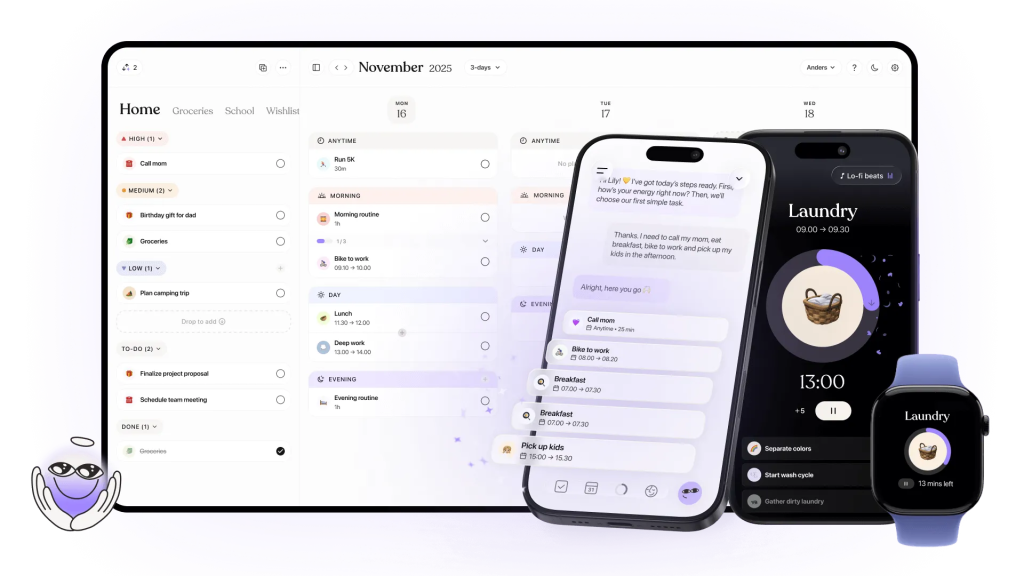
Set a recurring alarm — or use an app like Tiimo to prompt you once every hour with a simple question: “What am I doing right now, and is this what I should be doing?”
7. Break Hyperfocus With a “Stopping Rule”
Hyperfocus is one of ADHD’s most misunderstood traits. Understanding how dopamine drives your focus and motivation helps explain exactly why hyperfocus happens and how to work with it rather than against it. It can be a superpower, but it becomes a problem when it causes you to disappear for hours on a single task while everything else falls apart. You cannot always prevent hyperfocus from starting. But you can create rules that force a stop.
Pick one of these stopping rules:
- The alarm stop: Set a hard alarm. When it goes off, you stop within 5 minutes, no exceptions.
- The checkpoint rule: Every hour, you must do one thing from your priority list before continuing any other task.
- The “park the car” rule: When your stopping alarm fires, write down exactly where you are and what the next step is so your brain doesn’t resist stopping out of fear of losing progress.
The Forest app is also excellent for this it gamifies timed work sessions and penalizes you (virtually) for breaking focus, which many ADHD brains find surprisingly motivating.
8. Use “If-Then” Planning to Automate Transitions
One of the biggest reasons people with ADHD lose track of time is that transitions require a decision and decisions drain energy and invite distraction. If-then planning removes the decision entirely by pre-loading your response to a situation.
Format: “If [trigger], then [action].”
Examples:
- “If my 2:00 PM alarm fires, then I immediately save my work and open my email.”
- “If I finish lunch, then I immediately check my afternoon calendar block.”
- “If it’s 5:30 PM, then I do a 10-minute end-of-day shutdown routine.”
This is not a rigid system, it is a low-effort autopilot that kicks in when your brain wants to keep doing what it is already doing. Research shows if-then planning significantly improves follow-through, especially for people with ADHD. Write your top 3 if-then rules on a card and keep it visible on your desk.
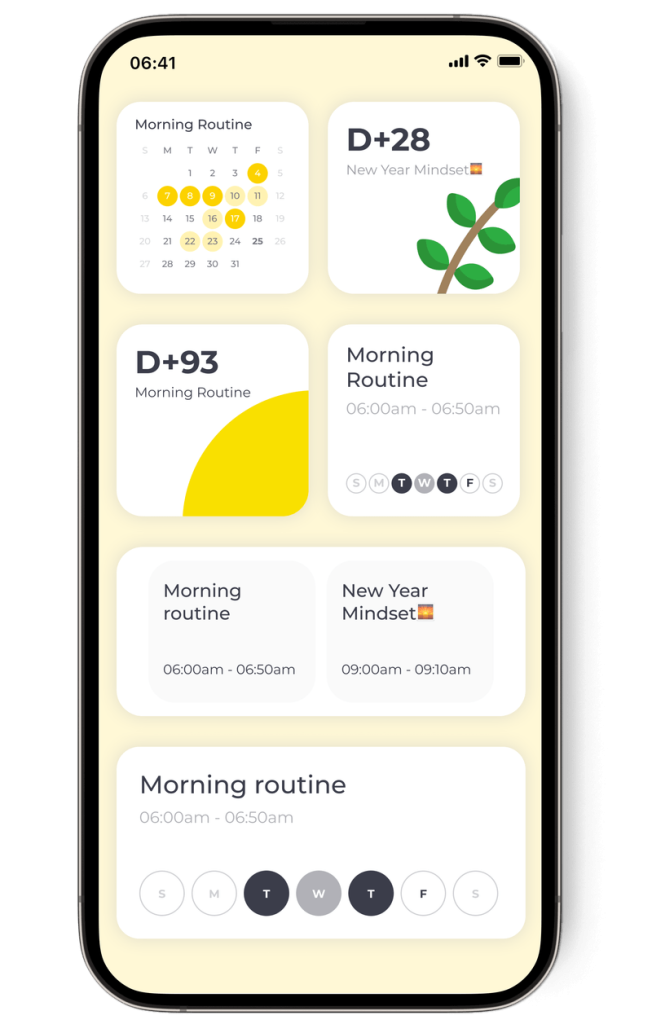
If you want the app to do the triggering for you, Routinery lets you build out your exact if-then sequences as guided routines with timers and step-by-step prompts. Instead of relying on memory, your phone walks you through each transition automatically. Write your top 3 if-then rules on a card to start, then graduate to Routinery once the habit clicks.
9. Review and Recalibrate Weekly
None of these strategies will be perfect from day one. The ADHD brain does not respond well to rigid systems, and that is okay, what matters is building a flexible framework you can return to. Set aside 15-20 minutes every Sunday (or whatever your week-start day is) to ask:
- Which time anchors or alarms actually helped this week?
- Where did I lose the most time, and what caused it?
- What one small adjustment could I make this coming week?
This is not a self-criticism session, it is a calibration. This kind of weekly review is one of the core habits inside a discipline system that works without motivation — and it is one of the highest leverage things you can do for your ADHD brain each week. Think of yourself as an engineer tweaking a system, not a student grading their own performance.
A simple journal or even a Notes app works fine. Bullet journal can also make this feel more structured if you want a dedicated space for it.
Common Mistakes to Avoid
1. Relying on memory alone. If your time management system only lives inside your head, it will fail. Externalize everything, alarms, written schedules, visual timers. Your memory is not the problem; your system is.
2. Setting only one reminder. One alarm does not give your brain enough runway. Layer your reminders so transitions feel gradual, not abrupt.
3. Creating a perfect system and then abandoning it. Complicated systems feel good to design and terrible to maintain. Start with one or two strategies, not all nine at once, and build from there.
4. Ignoring transitions. The gap between tasks is where time disappears. Schedule transitions explicitly and give them real time, at least 10-15 minutes between major tasks or obligations.
5. Treating slip-ups as failure. You will lose track of time again. That is not a character flaw, it is ADHD. The goal is not to be perfect; it is to catch yourself sooner and recover faster each time.
Frequently Asked Questions
Q: Is time blindness a real ADHD symptom, or just an excuse? A: It is absolutely a real symptom. Research by Dr. Russell Barkley and others shows that ADHD significantly impairs the brain’s ability to sense the passage of time. It is neurological, not motivational, and it responds to external support, not willpower.
Q: What is the best tool to stop losing track of time with ADHD? A: Visual timers, especially the Time Timer, are consistently recommended by ADHD coaches and therapists. Pairing a visual timer with layered phone alarms is a highly effective combination for most adults with ADHD.
Q: Can I use apps to help with time blindness? A: Yes. Apps like Tiimo, Alarmed, and Forest are specifically designed with ADHD-friendly features like visual schedules, recurring reminders, and gamified focus sessions. They are worth trying before investing in physical tools.
Q: Why do I lose time even when I’m trying to pay attention to it? A: Because time awareness for ADHD brains requires cognitive effort that your working memory may already be using for other things. External tools reduce that cognitive load so your brain doesn’t have to work as hard to stay on track.
Q: Will medication help with time blindness? A: ADHD medication can improve executive function and working memory, which may reduce time blindness for some people. However, medication alone rarely solves it completely — most people benefit from combining medication with external time management strategies like the ones in this article. Talk to your prescriber about what’s right for your situation.
Final Thoughts
Learning to stop losing track of time with ADHD is not about becoming a different person. It is about building an environment that compensates for how your brain actually works.
That is exactly what Vida Lit is here for. If you want to go even deeper on managing your time with ADHD as a busy professional check out how to manage time with ADHD without burning out — it pairs perfectly with the strategies in this article. Not to hand you a perfect productivity system and wish you luck, but to give you real, practical tools built around the way ADHD brains actually function. No shame. No “just try harder.” Just strategies that work.
You do not need willpower. You need visual timers, layered alarms, structured time blocks, and a system that catches you before you disappear for two hours.
Start small. Pick one strategy from this list, just one and use it consistently for a week. The Time Timer and layered alarms are the best starting points for most people. Once those become a habit, add another layer.
Your time is not the enemy. Time blindness is and now you have tools to fight back.
Ready to take back your time? Start today by setting a single visual timer for your next work session. Small wins build big systems. You’ve got this.