Cognitive Focus System: 4 Powerful Ways to Engineer Deep Attention in a Distracted World
A cognitive focus system is no longer a nice-to-have advantage — it is quickly becoming one of the most valuable skills you…
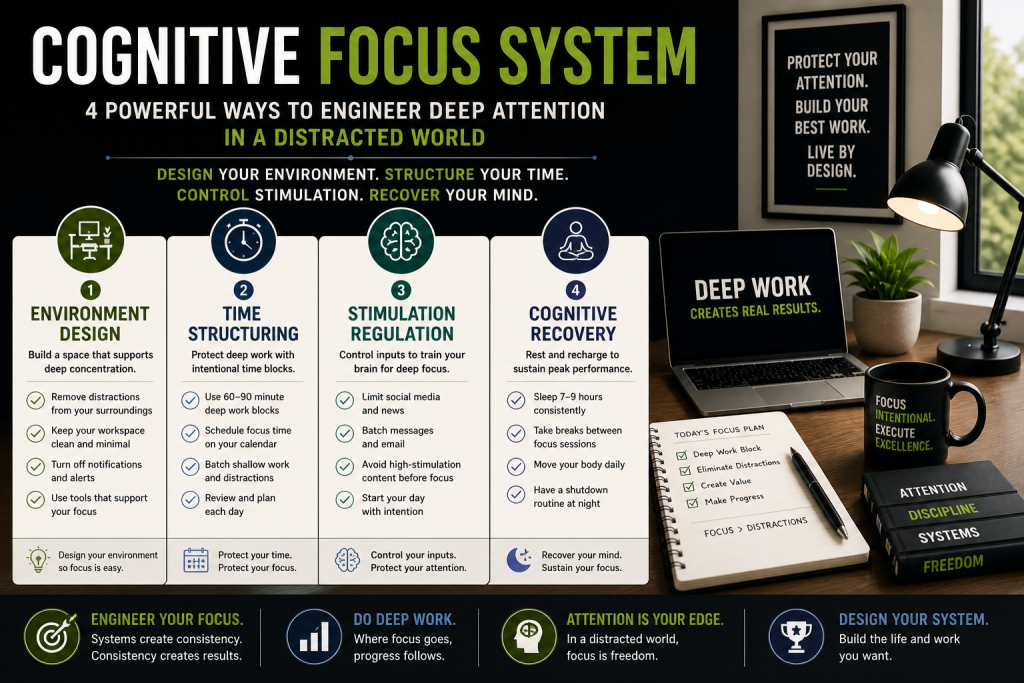
A cognitive focus system is no longer a nice-to-have advantage — it is quickly becoming one of the most valuable skills you can build in the modern world.
Whether you are developing a new skill, solving complex problems, advancing your career, or building something meaningful from scratch, your ability to sustain deep attention is directly proportional to the quality of your results. The people who can focus deeply and consistently in a world engineered for distraction have an enormous advantage over everyone else.
The problem is that maintaining focus today feels harder than it has ever been. Smartphones, social media feeds, constant notifications, and infinite content streams compete aggressively for every available minute of your attention. Most people assume this means they lack discipline or mental strength. In reality, the problem is almost never personal weakness. It is poor system design.
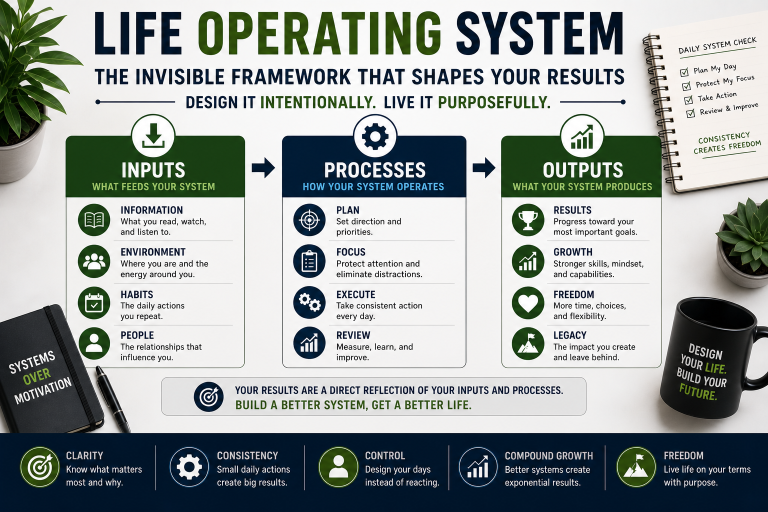
You cannot win a focus battle through willpower alone when your entire environment is architected to distract you. What you need is a cognitive focus system — a structured framework that engineers sustained attention through environment, time, stimulation management, and recovery. This is exactly how the Vida Lit Life Operating System approaches focus: not as a personality trait you either have or lack, but as something you deliberately build and maintain.
Here are the four components of a cognitive focus system that actually work.
Why a Cognitive Focus System Is More Important Than Willpower
Before building a cognitive focus system, it helps to understand why willpower alone keeps failing — because the answer is not what most people expect.
The brain’s ability to direct and sustain attention is managed primarily by the prefrontal cortex, the region responsible for executive functions like decision-making, planning, and impulse control. This system is powerful, but it is not unlimited. It requires energy, operates within cognitive load constraints, and is highly sensitive to the stimulation environment around it.
Dopamine plays a central role in this process. As a motivation and reward prediction signal, dopamine encourages sustained effort when the brain anticipates meaningful rewards. Research on attention and dopamine regulation shows that when the brain is repeatedly exposed to rapid, high-stimulation digital rewards — notifications, social feeds, short-form video — its ability to engage with slower, effort-based tasks degrades over time. The brain recalibrates toward easy dopamine, and deep work starts to feel uncomfortable by comparison.
This is not a discipline problem. It is a neurological calibration problem — and a cognitive focus system is the solution.
Research from the University of California Irvine found that it takes an average of over 20 minutes to fully regain deep focus after a single interruption. In a typical workday filled with notifications, messages, and task switching, most people never reach the level of sustained concentration required for meaningful progress. The cost is not just lost time — it is lost cognitive depth.
The Modern Attention Crisis Your Cognitive Focus System Must Solve
The environment most people work in today is not neutral. It is actively hostile to deep focus.
Social media platforms, messaging apps, streaming services, and news feeds are engineered by some of the most sophisticated behavioral design teams in the world, with one goal: to maximize the time your attention spends on their platform. Every notification, every algorithmic recommendation, every infinite scroll is a deliberate feature designed to interrupt and recapture your attention as frequently as possible.
The result is what researchers call cognitive switching costs — the mental overhead the brain incurs every time it shifts focus between tasks. Studies on multitasking and attention from the American Psychological Association show that even brief mental blocks created by task switching can cost as much as 40 percent of productive time. Multiply that across a typical workday and the scale of the problem becomes clear.
Over time, this constant interruption pattern trains the brain to expect stimulation — making quiet, focused work feel genuinely uncomfortable rather than just difficult. Building a cognitive focus system is how you reverse that conditioning and reclaim your capacity for deep, sustained attention.
The 4-Component Cognitive Focus System
Component 1: Environmental Design — Build a Space That Supports Your Cognitive Focus System
The environment where you work has a more powerful influence on attention than most people give it credit for. Small, seemingly minor distractions — a phone within reach, open browser tabs, background notifications — create constant low-level cognitive pull that fragments concentration before deep work even begins.
Building the environmental layer of your cognitive focus system means designing your workspace to make focus the path of least resistance:
- Place your phone in another room or in a drawer during deep work blocks — physical distance is significantly more effective than relying on self-control.
- Close every browser tab not directly related to the task you are working on.
- Keep your workspace clean and organized — visual clutter creates cognitive clutter.
- Turn off all non-essential notifications on every device during focus blocks.
- Use headphones as a behavioral signal — to yourself and to others — that you are in a focus state and unavailable.
Behavioral research consistently shows that environmental cues shape behavior automatically, often bypassing conscious intention entirely. When your environment is designed for focus, your cognitive focus system runs with far less friction and far less reliance on willpower.
Component 2: Time Structuring — Protect Deep Work Inside Your Cognitive Focus System
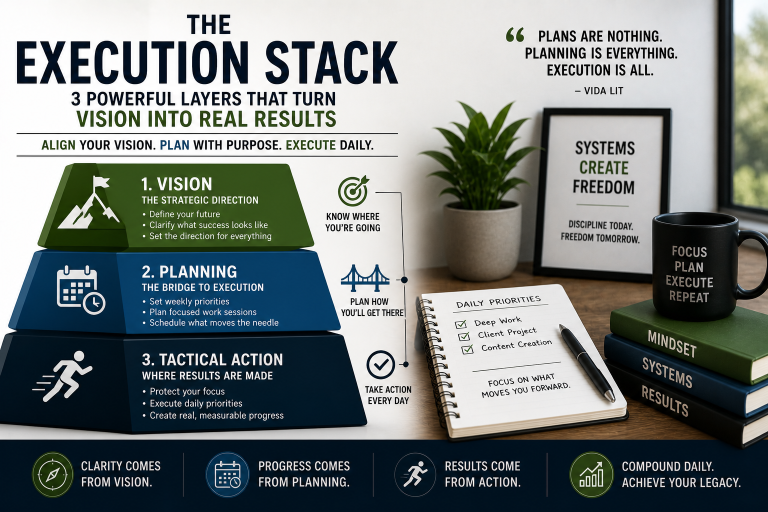
A cognitive focus system without clear time structure collapses under the weight of reactive demands. Focus does not happen accidentally. It has to be scheduled, protected, and treated as a non-negotiable part of the day.
The most effective time structure for deep cognitive work is the deep work block: a dedicated period of 60 to 90 minutes committed to a single meaningful task, with all distractions removed. Cal Newport’s research on deep work demonstrates that the ability to perform concentrated, uninterrupted cognitive work is both increasingly rare and increasingly valuable — making it one of the highest-leverage investments you can make in your cognitive focus system.
A practical time structure to build into your week:
- Morning deep work block (60–90 minutes): Your peak cognitive hours. Reserve this exclusively for your most important, highest-value work — not email, not meetings, not administrative tasks.
- Midday reactive block: Calls, messages, admin, and communication. Lower-stakes tasks that do not require deep concentration.
- Afternoon focus block (optional, 45–60 minutes): A second deep work window if your schedule allows, ideally after a genuine recovery break.
- End-of-day review (15 minutes): Close the day intentionally. Review what you completed and set tomorrow’s top priority before you close the laptop.
When these blocks are scheduled in advance and treated as fixed commitments, your cognitive focus system stops being aspirational and starts being operational.
Component 3: Stimulation Regulation — Recalibrate Your Brain for Deep Focus
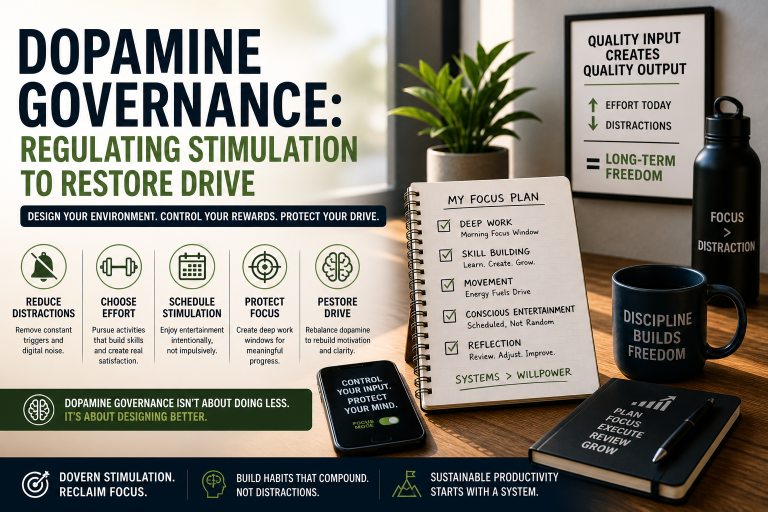
The third component of a cognitive focus system is managing the stimulation inputs that directly affect your brain’s ability to sustain attention. This is the dopamine governance layer — and it is one of the most underrated levers available.
When the brain is exposed to constant high-stimulation digital inputs throughout the day, it recalibrates toward easy rewards and away from effortful concentration. Limiting those inputs during your most important hours allows your cognitive focus system to operate at full capacity.
Practical stimulation regulation strategies:
- Avoid checking social media, news, or entertainment content before or during your deep work blocks.
- Batch all reactive communication — email, messages, notifications — into designated time windows rather than checking continuously throughout the day.
- If you consume high-stimulation content in the evening, build in a 30-minute low-stimulation wind-down before sleep to avoid disrupting overnight cognitive recovery.
- Use the first 30 minutes of your morning to orient toward your priorities before exposing your brain to external stimulation.
The goal is not to eliminate stimulation — it is to schedule it intentionally so it does not bleed into the hours your cognitive focus system needs to operate at its best.
Component 4: Cognitive Recovery — Fuel Your Focus System for the Long Term
A cognitive focus system that ignores recovery is running on borrowed time. Even the most disciplined focus practice degrades without adequate restoration — and most high performers underinvest in this component more than any other.
The brain is not designed for uninterrupted effort. It cycles between states of focused engagement and recovery, and trying to override that cycle with sheer persistence produces diminishing returns. Research on attention and mental fatigue shows that short, intentional breaks between work sessions restore cognitive resources and sustain performance across longer periods more effectively than grinding through without rest.
The recovery layer of your cognitive focus system includes:
- Sleep — the most powerful cognitive recovery tool available. Quality sleep strengthens attention regulation, consolidates memory, and restores prefrontal cortex function. Protecting a consistent sleep window is non-negotiable inside a working cognitive focus system.
- Physical movement — even a 10 to 20 minute walk between deep work blocks measurably restores attention capacity and reduces mental fatigue.
- Genuine breaks — stepping fully away from screens and tasks during breaks, rather than switching to passive scrolling, allows real cognitive restoration.
- End-of-day shutdown — a consistent ritual that signals to the brain that work is finished and recovery can begin. Without it, the prefrontal cortex stays in a low-level activation state that prevents full restoration overnight.
When all four components of the cognitive focus system are working together — environment, time structure, stimulation regulation, and recovery — sustained deep attention becomes far more achievable and far less dependent on motivation or willpower.
Cognitive Focus Systems and ADHD
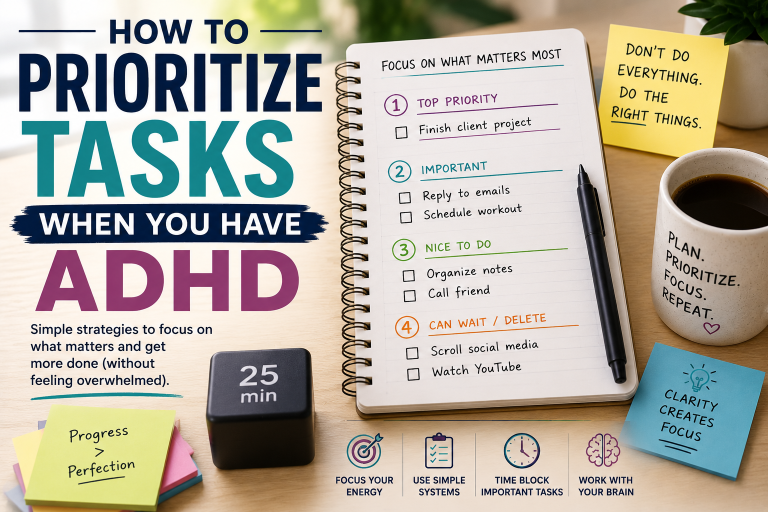
For individuals with ADHD, building a cognitive focus system is not just helpful — it is transformative.
ADHD involves differences in attention regulation and executive functioning that make sustained focus genuinely harder to achieve through effort alone. But structured systems provide external scaffolding that supports the brain’s natural tendencies rather than fighting against them.
Environmental design that removes decision points, clearly defined time blocks that reduce ambiguity about what to work on, and stimulation regulation that limits competing inputs all reduce the cognitive burden that makes focus particularly difficult for ADHD brains. A well-designed cognitive focus system does not require neurotypical attention to work — it creates conditions where any brain can perform at a higher level.
Instead of relying on willpower that fluctuates, the system provides consistent external structure. That is the core principle of the Vida Lit approach: design the environment, and let the environment do most of the work.
Frequently Asked Questions About Building a Cognitive Focus System
What is a cognitive focus system? A cognitive focus system is a structured framework — built around environmental design, time structuring, stimulation regulation, and cognitive recovery — that engineers sustained attention without relying on willpower or motivation. It is the approach to focus used within the Vida Lit Life Operating System.
Why does willpower fail as a focus strategy? Willpower draws on finite cognitive resources that deplete throughout the day. Research on ego depletion and decision fatigue shows that self-control declines as mental energy is spent — which is why focus is hardest to maintain in the afternoon and after high-demand periods. A cognitive focus system reduces the need for willpower by designing the conditions that make focus natural.
How long does it take to build a cognitive focus system? A basic cognitive focus system — one deep work block per day, basic environmental design, and a simple stimulation schedule — can be operational within one to two weeks. Full system calibration, where deep focus feels natural rather than effortful, typically takes four to eight weeks of consistent practice.
Can a cognitive focus system help with ADHD? Yes. While a cognitive focus system does not replace professional support for ADHD, structured environmental design, clear time blocks, and reduced stimulation inputs significantly reduce the cognitive burden of attention regulation. System design provides external structure that supports focus even when internal regulation is inconsistent.
Build Your Cognitive Focus System and Reclaim Your Attention
Focus is not a gift that some people are born with. It is a system — and like every system, it can be intentionally designed, built, and improved over time.
In a world engineered to fragment your attention at every turn, building a cognitive focus system is one of the highest-leverage investments you can make in your productivity, your performance, and the quality of work you are capable of producing.
This is the core of what Vida Lit is built to help you do. Follow us on [Instagram/X] for daily frameworks and systems built around the Life Operating System — and be the first to know when we launch something bigger.