Best Weekly Planners for ADHD Professionals That Actually Work
If you have ever bought a beautiful planner, used it for three days, and then watched it collect dust on your desk…

If you have ever bought a beautiful planner, used it for three days, and then watched it collect dust on your desk — you are not alone.
For professionals with ADHD, the problem is never motivation. It is that most planners were not designed for how your ADHD brain actually works.
Standard weekly planners assume you will remember to check them, that you can prioritize tasks without feeling overwhelmed, and that a blank box labeled “Monday” is enough structure to get things done. For ADHD brains, that is basically handing someone a blank canvas and saying “just paint a masterpiece.” The structure needs to come built into the planner — not invented by you every single morning.
The right weekly planner for ADHD does not just track your schedule. It externalizes your brain. It breaks your week into digestible pieces, prompts you to set priorities before the chaos hits, and gives you just enough structure without feeling like a spreadsheet in book form.
This is one of the most important tools in a complete ADHD productivity system — because no amount of motivation or willpower replaces having the right external structure in place. We researched and reviewed the best weekly planners for ADHD professionals so you do not have to waste time and money on something that will not stick. Here is what actually works.
What to Look For in a Weekly Planner for ADHD
Not all planners are built the same. Here is what separates the ones that collect dust from the ones that genuinely change your week.
Time-Blocking Sections
ADHD brains struggle with the abstract concept of “later.” Planners with dedicated time slots force you to assign tasks to specific windows — making commitments real rather than wishful. When a task has a time attached to it your brain treats it like an appointment rather than a suggestion. That small shift from “I’ll get to it” to “I’m doing this at 2pm” can be the difference between a productive day and a lost one.
Daily Priority Boxes
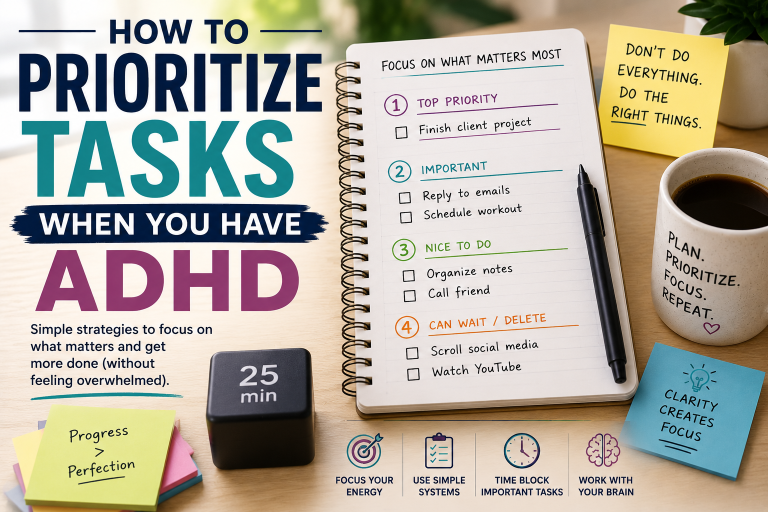
You need a dedicated space to write your top one to three non-negotiable tasks for the day. Without this, everything feels equally urgent — which for ADHD means either analysis paralysis or chasing whatever feels most stimulating. A priority box acts as a filter for your entire day. Instead of staring at fifteen things and freezing, you already know exactly where to start the moment you open your planner. This is closely tied to how dopamine drives focus and motivation — the clearer your priorities, the less your brain has to fight itself to get started.
Minimal but Consistent Structure
Too much white space equals overwhelm. Too many fields equals abandonment. The sweet spot is a layout that guides you without requiring a manual to fill out. The goal is a planner that feels like a helpful nudge — not a homework assignment. If filling it in takes more energy than it saves, you will stop using it by Wednesday. And that is not a discipline problem. That is a design problem.
Weekly Overview Plus Daily Breakdown
You need to see the full week AND zoom into each day. Having both views in one planner helps with the ADHD tendency to lose track of upcoming deadlines until they are suddenly tomorrow. The weekly view gives your brain the big picture it needs to avoid being blindsided. The daily breakdown turns that big picture into action — without forcing you to hold it all in your head at once.
Compact and Portable
If it lives on your desk and never travels with you, it will not get used consistently. ADHD professionals need a planner that moves through real life — meetings, commutes, coffee shops, waiting rooms. Your planner needs to be where you are, not where you wish you were.
Undated or Flexible Start Dates
Life with ADHD rarely goes to plan. An undated planner means you can restart anytime without the guilt of blank pages staring back at you from a week you missed. That guilt is one of the biggest reasons people abandon planners entirely — not because the system failed but because missing a few days made the whole thing feel broken. An undated planner quietly removes that barrier and gives you full permission to just pick up where you left off.
Prompts for Reflection
Brief end-of-day or end-of-week reflection prompts help your ADHD brain process what happened and reset intentionally rather than barreling into the next week with no recalibration. Without a pause to reflect every week blurs into the next. These prompts do not need to be deep — even a single question like “What worked today?” gives your brain a moment to learn from the day rather than just survive it.
The 7 Best Weekly Planners for ADHD Professionals
1. Panda Planner Pro — Best Overall Weekly Planner for ADHD
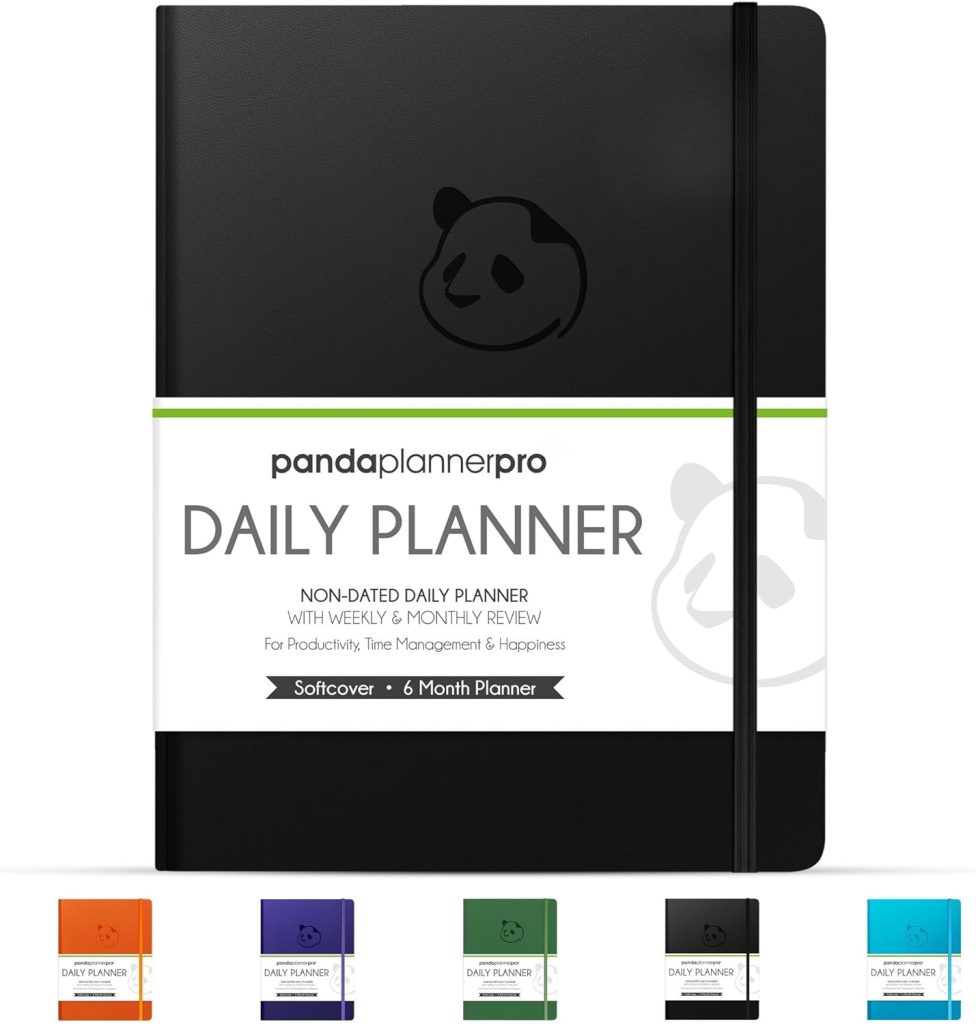
Best for: ADHD professionals who want a research-backed structure built around habit and mindset
The Panda Planner Pro is one of the most widely recommended planners in the ADHD community — and for good reason. It combines daily, weekly, and monthly planning into a single notebook using a system rooted in positive psychology and habit science. Every page prompts you to identify your top priorities, review your schedule, and end each day with a brief reflection.
What Makes It Great for ADHD:
- Daily, weekly, and monthly views all in one planner
- Built-in “Most Important Tasks” section prevents priority blindness
- Morning and evening reflection prompts create consistent bookend habits
- Compact size makes it genuinely travel-friendly
- Undated format — restart anytime with zero guilt
Potential Drawback: The layout is fairly text-heavy. If you prefer visual or minimal designs it can feel like a lot to fill out every day.
Best For: ADHD professionals who thrive with structured prompts and want a science-backed daily planning system that covers every part of their day. PANDA PANDA PANDAAAA!!!
2. Full Focus Planner by Michael Hyatt — Best for ADHD Goal-Driven Professionals
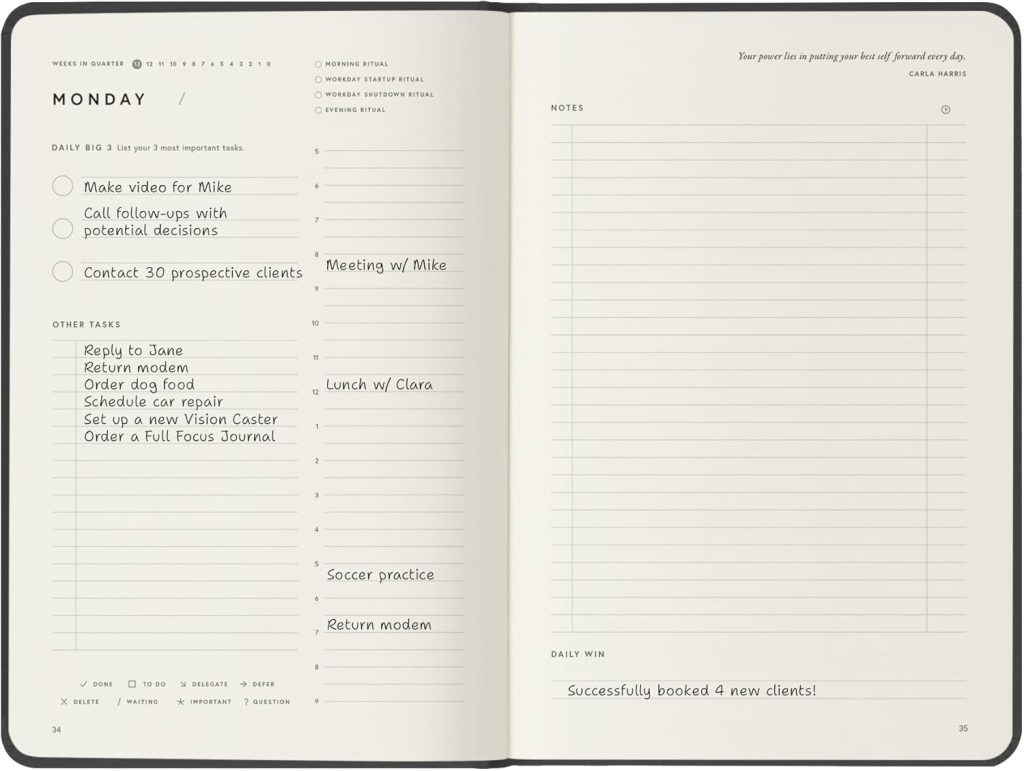
Best for: Entrepreneurs and high-achievers with ADHD who need quarterly goal alignment with daily execution
The Full Focus Planner is built on the premise that your daily tasks should connect directly to your biggest goals. Each quarter you define your major outcomes and the weekly and daily pages flow from those anchors. For ADHD professionals who constantly feel busy but not productive this top-down structure is genuinely transformative. It connects directly to the kind of personal operating system that high-performing ADHD professionals build around their work.
What Makes It Great for ADHD:
- Weekly “Big 3” tasks create clear non-negotiable focus for the week
- Daily rituals section builds consistency into your morning
- Time-blocked daily schedule pages for every hour
- Quarterly review system addresses ADHD’s struggle with long-term vision
- High-quality hardcover build with lay-flat binding
Potential Drawback: It is one of the pricier planners on this list and the quarterly format means you will need to buy multiple per year.
3. Clever Fox Weekly Planner — Best Budget Weekly Planner for ADHD
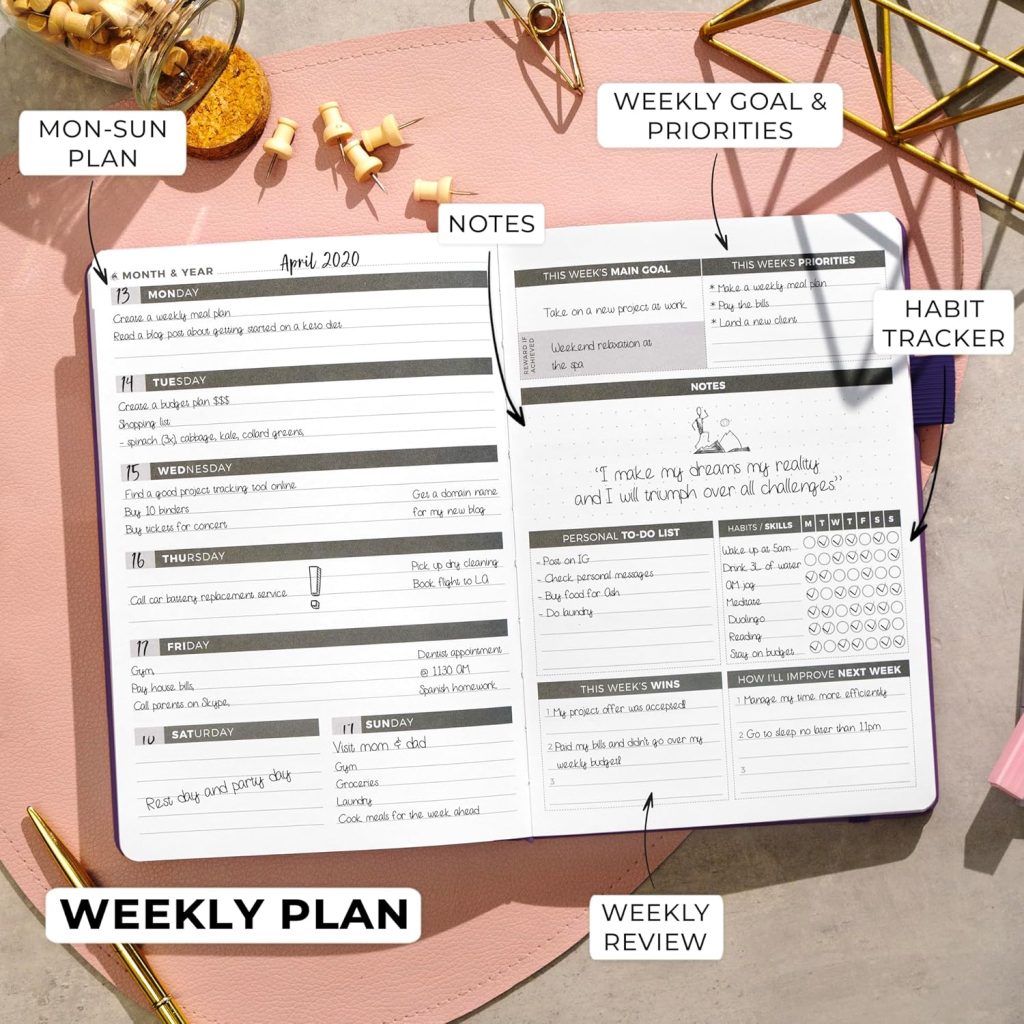
Best for: ADHD professionals who want simple, affordable structure without the overwhelm
The Clever Fox Weekly Planner keeps things beautifully simple. Each spread gives you a weekly overview with priority slots, daily to-do columns, a notes section, and habit trackers. It is not flashy — which is exactly the point. Less decision fatigue, more doing.
What Makes It Great for ADHD:
- Weekly view at a glance with space for top priorities
- Habit tracker built right into the weekly spread
- Undated pages — start any time, restart any time
- Affordable price point — no stress if you miss a week
- Multiple cover colors available — a small detail that genuinely matters for ADHD dopamine
Potential Drawback: There is no daily time-blocking. If you need hour-by-hour structure you may want to pair this with a digital calendar like Google Calendar or the best time blocking apps for ADHD professionals.
4. Ink+Volt Planner — Best Premium Weekly Planner for ADHD
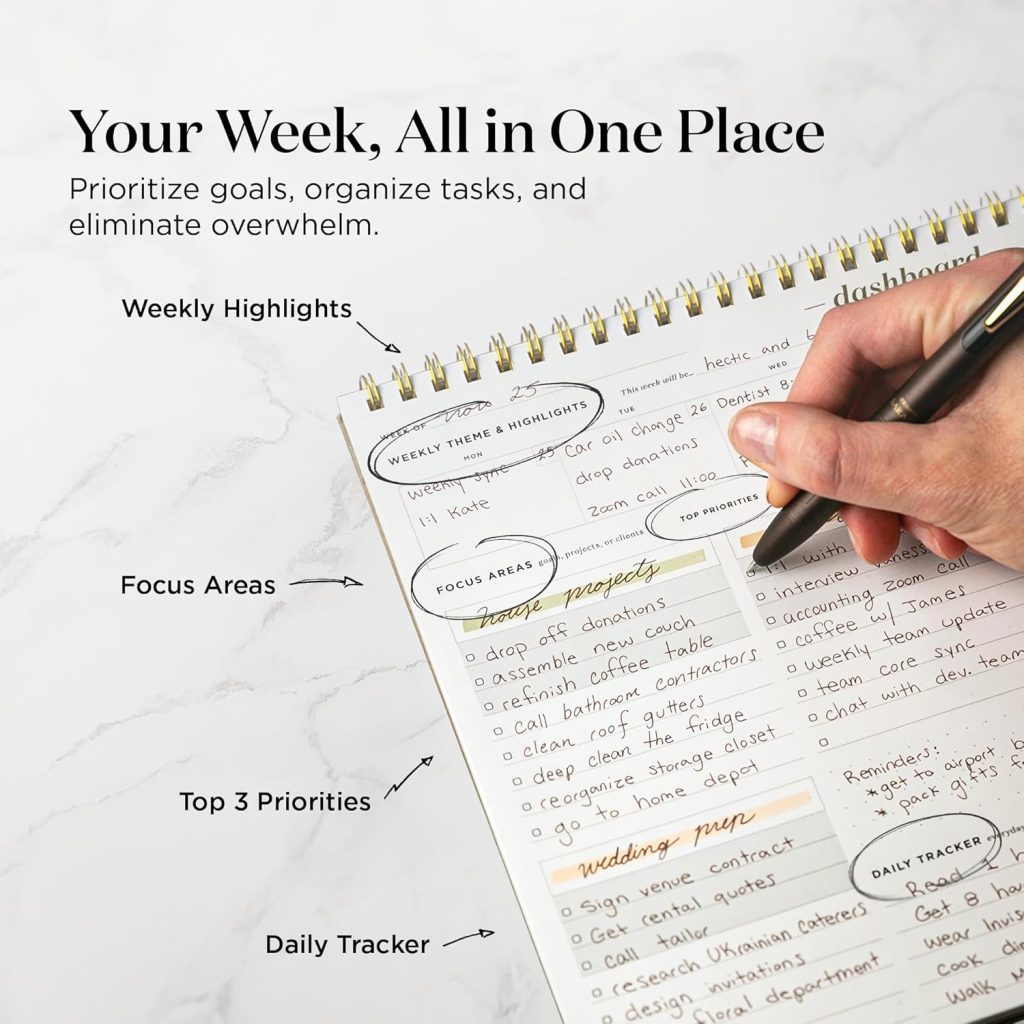
Best for: ADHD professionals who want premium quality with intentional goal-setting built in
Ink+Volt makes a beautifully crafted planner with a strong focus on intentionality. The weekly layout includes a priority-first structure with time-blocked daily pages and an end-of-week review. The company philosophy — “do less, better” — is honestly peak ADHD wisdom distilled into a planner design.
What Makes It Great for ADHD:
- Weekly reflection built into every spread
- Clear “what must get done today” section on every daily page
- Focus on single-page simplicity reduces visual overwhelm
- Thick lay-flat pages are satisfying to write on — a genuine sensory win for ADHD
- Undated version available alongside the January start option
Potential Drawback: Slightly smaller writing space per day compared to other planners on this list. If you have a lot to schedule it can feel tight.
5. Hobonichi Techo Cousin — Best for ADHD Professionals Who Want Full Flexibility
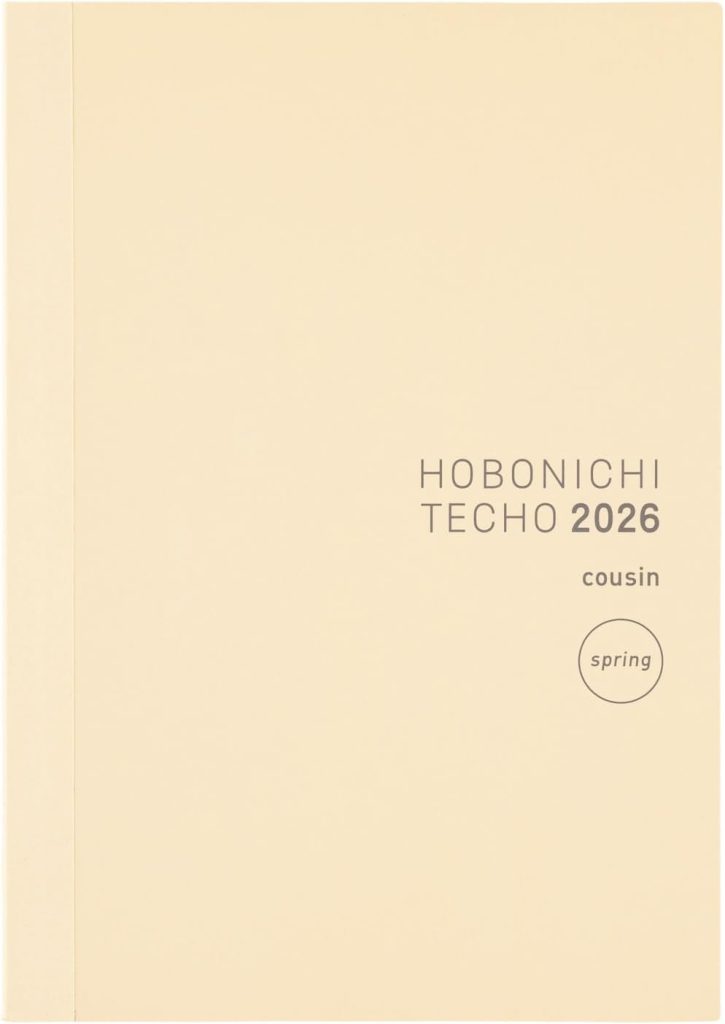
Best for: ADHD professionals who prefer maximum flexibility and want to build their own planning system
The Hobonichi Techo Cousin is a cult favorite in the planner community — and ADHD users love it because the near-transparent grid pages let you design your own layout entirely. Every week gets its own spread and every day gets a full page. It is as minimal or as detailed as you want it to be.
What Makes It Great for ADHD:
- Highly flexible — use it however your brain needs on any given day
- Durable compact A5 size that travels anywhere
- Full weekly spread plus individual daily pages
- Tomoe River paper is ultra-thin but smooth — ideal for detail-oriented ADHD users
- New edition available each year with a growing accessories ecosystem
Potential Drawback: There are no built-in prompts or structure. If you need guidance on how to plan this planner will not provide it. It works best for experienced planners who already know their system and want total freedom to execute it.
6. Structured App — Best Digital Weekly Planner for ADHD
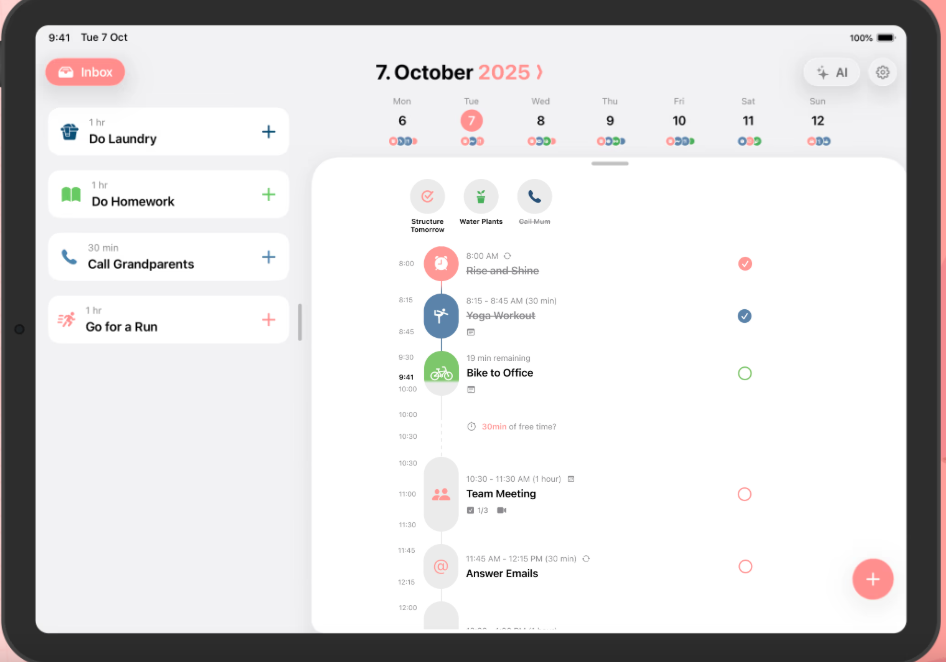
Best for: ADHD professionals who live on their devices and need a digital weekly planner that is actually beautiful and functional
Not everyone wants paper. Structured is a visual daily and weekly planning app that turns your to-do list into a timeline. You can see every task laid out across your day in a clean color-coded visual flow. It syncs with your calendar, sends reminders, and eliminates the “I forgot to check my planner” problem that paper planners can’t solve on their own.
What Makes It Great for ADHD:
- Visual timeline layout makes time feel real — a major ADHD time blindness win
- Drag-and-drop task scheduling
- Push notification reminders to actually open and use it
- Syncs with Apple Calendar and Google Calendar
- Available on iOS and macOS
- Free version available with Pro plan unlocking full features
Potential Drawback: You need your phone nearby and charged. Not ideal if you are actively trying to reduce screen time or digital distractions during focus sessions.
Quick Comparison: Best Weekly Planners for ADHD Professionals
| Planner | Format | Time-Blocking | Undated | Price Range | Best For |
|---|---|---|---|---|---|
| Panda Planner Pro | Paper | ✅ | ✅ | $$ | Structured daily habits |
| Full Focus Planner | Paper | ✅ | ❌ | $$$ | Goal-to-task alignment |
| Clever Fox | Paper | ❌ | ✅ | $ | Simple weekly overview |
| Passion Planner | Paper | ✅ | ✅ | $$ | Visual and creative thinkers |
| Ink+Volt | Paper | ✅ | ✅ | $$ | Intentional minimalists |
| Hobonichi Cousin | Paper | ❌ | ✅ | $$ | DIY system builders |
| Structured App | Digital | ✅ | ✅ | Free / $$ | Screen-first professionals |
How to Actually Stick With Your Planner as an ADHD Professional
Choosing the right planner is only half the equation. Here is how to make the habit stick long term.
1. Anchor your planning session to an existing habit. Pick one consistent time — Sunday evening, Monday morning, it does not matter which. What matters is consistency. Attach your planning session to something you already do automatically — your morning coffee, your commute, your lunch break. The existing habit carries the new one until it becomes automatic on its own.
2. Start with just one section. Do not try to fill every field on day one. Pick the single most important element — your top three tasks or your time blocks — and do only that for the first week. Add more sections gradually as the habit builds. A partially used planner that you actually open every day is worth infinitely more than a perfectly filled planner you abandoned after three days.
3. Keep your planner visible at all times. Out of sight is genuinely out of mind for ADHD brains. Your planner should live on your desk surface — not in a drawer, not in your bag. If you cannot see it you will not use it. Consider this the single most important implementation rule on this list.
4. Forgive missed days and just restart. A missed week does not mean the system failed. It means you are human with ADHD. Skip the guilt, flip to today’s page, and keep going. This is exactly why undated planners are worth considering — they make restarting feel like a choice rather than an admission of failure.
5. Pair your planning habit with an external trigger. A sticky note on your laptop screen, a phone alarm at planning time, or a visual cue on your desk that prompts you to open your planner. External triggers are your best friend when internal motivation is not reliable — which for ADHD brains is most mornings. For more on building systems that run without motivation check out our guide on building a discipline system that works without willpower.
Frequently Asked Questions
What type of planner works best for ADHD professionals? Planners with built-in daily priority sections, time-blocking layouts, and end-of-day reflection prompts tend to work best for ADHD. The structure reduces the cognitive load of deciding how to plan so you can focus on actually planning rather than designing the system from scratch each morning. The Panda Planner Pro and Full Focus Planner are consistently the top recommendations for this reason.
Should I use a paper planner or a digital planner for ADHD? It depends entirely on your work style and environment. Paper planners offer a distraction-free tactile experience that many ADHD brains respond well to — the physical act of writing something down creates a stronger memory trace than typing. Digital planners like Structured are better if you are already screen-based and need reminder notifications to actually check your plan. Many ADHD professionals use both — paper for weekly planning and a digital calendar for daily time blocking.
How do I stop abandoning my planner after a few days? Start smaller than you think you need to. Commit to filling in just your top three tasks each morning for one week — nothing else. Once that habit is anchored add the next section. Also make your planner impossible to ignore — keep it open on your desk rather than closing it at the end of each session.
Are undated planners better for ADHD? Generally yes. Undated planners remove the guilt of skipped days and allow you to restart without wasted pages making you feel behind. For ADHD brains that have unpredictable weeks — which is most ADHD brains most of the time — that flexibility is genuinely important for maintaining the habit long term.
Can a planner really help with ADHD or do I need more than that? A planner is a tool — not a cure. For many ADHD professionals it is a foundational piece of their external support system but it works best alongside other strategies like time blocking, body doubling, and professional support where appropriate. According to ADDitude Magazine — one of the leading ADHD resources online — external planning tools are among the most recommended non-medication strategies for managing ADHD at work. Think of your planner as one essential piece of a larger system rather than the whole solution.
Final Thoughts: The Best Planner Is the One You Actually Use
Finding the right weekly planner is one of the most practical investments you can make as an ADHD professional. It is not about being more disciplined — it is about building an external system that works with your brain rather than against it.
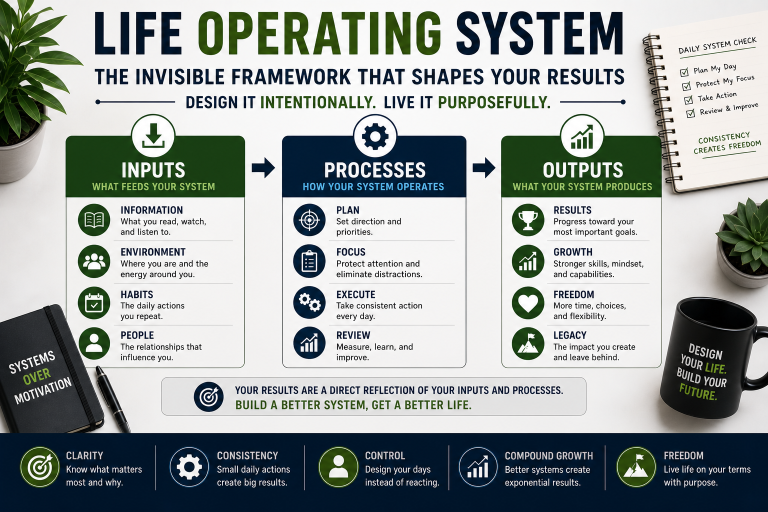
At Vida Lit we believe that productivity for ADHD adults is not about trying harder. It is about building smarter systems — the kind that show up for you even on the days when motivation does not. A great weekly planner is one of the simplest and most immediate ways to start building that system today.
Pick one from this list. Start this week. And remember — the best planner is not the most beautiful one or the most expensive one. It is the one you actually open every morning.
Ready to find your perfect ADHD planner? Pick the one that fits your brain and your work style — and commit to just one week. You might be surprised how much clarity a little external structure can bring.