Best Alarm Systems for ADHD Morning Routines – Wake Up Without the War
You’ve snoozed your phone alarm six times. You’ve slept through it completely. You’ve woken up in a panic, already late, heart hammering,…
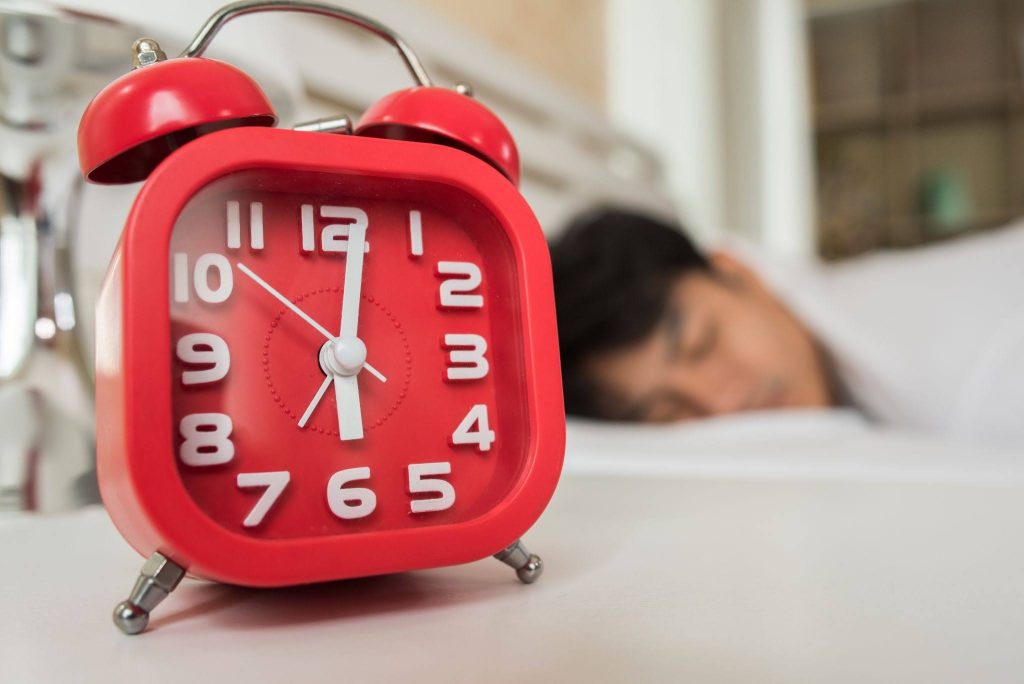
You’ve snoozed your phone alarm six times. You’ve slept through it completely. You’ve woken up in a panic, already late, heart hammering, and the shame spiral starts before your feet hit the floor.
If that sounds familiar, it’s not because you’re lazy. ADHD brains genuinely struggle with sleep transitions. The part of your brain that’s supposed to register ‘that sound means wake up NOW’ takes longer to engage, especially if your dopamine levels are lower in the morning. Understanding how dopamine affects your focus and motivation helps explain exactly why ADHD mornings feel so neurologically impossible — and why the right system matters more than willpower. A standard phone alarm was never built for you.
The good news? There are alarm systems specifically designed to cut through ADHD hypersleep, sensory issues, and the dreaded snooze reflex. Some shake your bed. Some run away from you. Some flood your room with sunlight before you even open your eyes. All seven on this list are real tools that work in the real world, not gimmicks.
This guide breaks down the best alarm systems for ADHD mornings so you can stop dreading 7 AM and start owning it.
What to Look For in an Alarm System for ADHD Mornings
✅ It Has to Be Hard to Dismiss
The biggest mistake people with ADHD make is using a snooze-friendly alarm. If you can silence it in two seconds with a half-conscious thumb swipe, it won’t work. Look for alarms that require physical movement, multiple steps, or sustained effort to turn off.
✅ It Should Engage More Than One Sense
Sound alone often isn’t enough. The best alarm systems for ADHD mornings use combinations such as light + sound, vibration + sound, or physical movement. Multi-sensory input is harder for your sleeping brain to ignore and filter out.
✅ It Should Reduce Morning Anxiety, Not Spike It
A jarring klaxon that rockets you out of bed in a panic isn’t a good start to the day. Sunrise simulation alarms, for example, wake you up more gently, which can lower cortisol and reduce that rushed, frantic feeling that derails a morning before it starts.
✅ It Should Have Customization Options
ADHD isn’t one-size-fits-all. Some of us sleep like the dead; others are light sleepers who need a gentle nudge. Being able to adjust volume, light intensity, vibration, and alarm duration matters more than you’d think.
✅ It Should Be Consistent and Reliable
If an alarm app can be accidentally silenced by a Do Not Disturb setting or a dead phone battery, it’s a liability. Dedicated alarm devices remove that variable.
The 7 Best Alarm Systems for ADHD Mornings
1. Sonic Alert Sonic Bomb SBB500SS
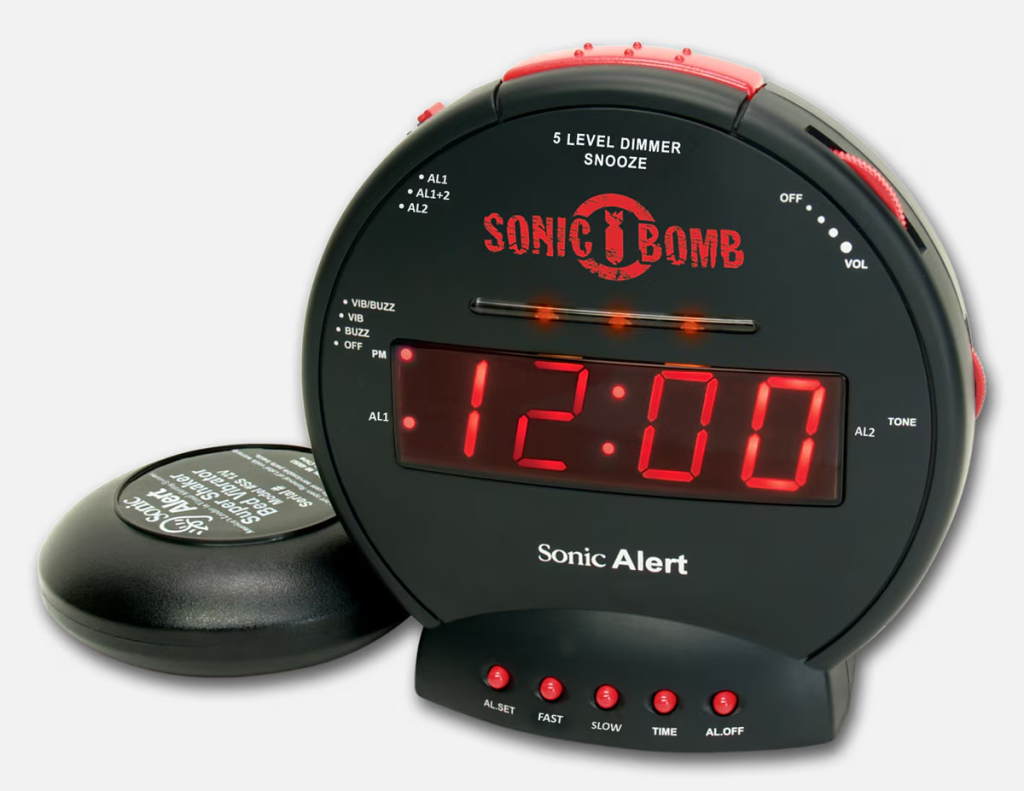
Idea For: Heavy Sleepers Who Sleep Through Everything
If a standard alarm sounds like a whisper to your unconscious brain, the Sonic Bomb is the answer. This alarm clock produces up to 113 decibels, that’s about as loud as a rock concert. It also includes a bed shaker that plugs in under your mattress and physically vibrates you awake.
What Makes It Great for ADHD:
- The 113dB alarm is nearly impossible to sleep through.
- Dual alert system: sound + physical bed vibration simultaneously.
- Extra-loud, pulsing red LED display flashes as an additional visual cue.
- Volume and tone are fully adjustable so you can dial it to your tolerance.
- Designed originally for the Deaf and hard-of-hearing community, built to actually work.
Potential Drawback: It is genuinely, aggressively loud. If you share a bedroom or live in an apartment with thin walls, you will have an angry partner or neighbor situation on your hands. Use the bed shaker setting alone if you need something more considerate.
Best For: The ADHD deep sleeper who has tried every phone alarm combination and still wakes up late.
If you’ve slept through alarms your entire life and are tired of starting your mornings in panic mode, the Sonic Bomb may be the wake-up system your brain actually needs.
Set it up tonight, place the bed shaker under your mattress, and give yourself one week without relying on your phone alarm.
2. Clocky Alarm Clock on Wheels
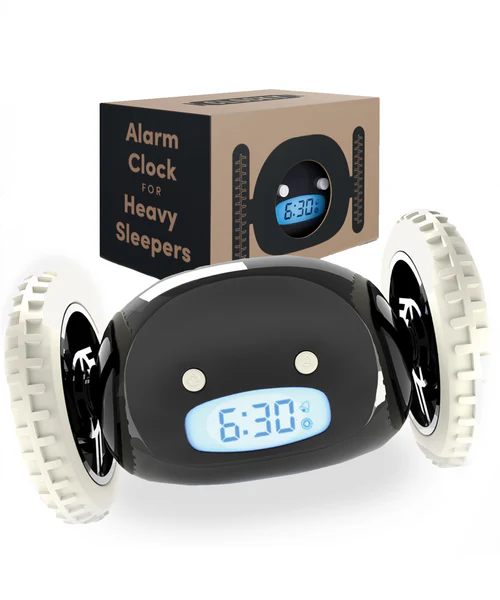
Ideal For: Chronic Snoozers Who Need to Get Their Body Moving
Clocky isn’t just an alarm, it’s a small act of chaos. When the alarm goes off, Clocky rolls off your nightstand, drops to the floor, and wheels itself around your room, beeping and changing direction at random. The only way to stop it is to physically get up, find it, and turn it off. By the time you’ve done that, you’re standing. And once you’re standing, your chances of actually staying awake skyrocket.
What Makes It Great for ADHD:
- Forces immediate physical movement, a proven ADHD activation technique.
- Once you’re up and chasing it, your brain engages faster.
- Runs on wheels with rubber tires, survives the drop off the nightstand.
- Snooze-once setting available if cold turkey feels too brutal.
- Loud, persistent beeping that changes in pitch and rhythm, hard to tune out.
Potential Drawback: Not a great option if you have mobility limitations or if your bedroom floor is cluttered (it will get stuck and just beep in the corner, which is less effective and more tragic). Also requires AA batteries.
Best For: People who know they’ll lie there bargaining with themselves for 20 minutes if given the chance.
If your biggest problem is endlessly snoozing and negotiating with yourself in bed, Clocky forces your body to wake up before your brain can talk you out of it.
Put it across the room tonight and let future-you handle the chase tomorrow morning.
3. Lumie Bodyclock Shine 300
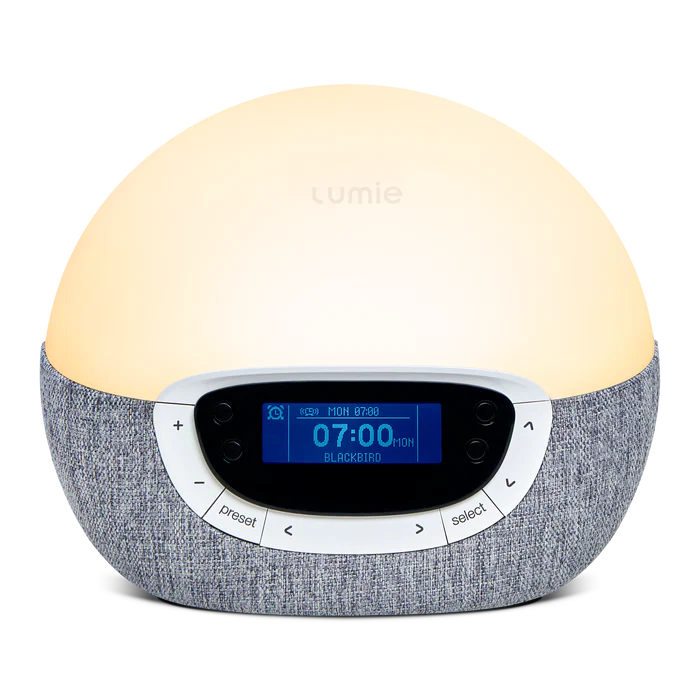
Ideal For: People Who Wake Up Anxious or Groggy and Need a Gentler Start
The Lumie Bodyclock Shine is one of the most respected sunrise alarm clocks on the market, used clinically in research on sleep disorders. Sunrise alarms work by gradually brightening your room over 15–90 minutes before your wake time, simulating natural sunlight. Your body’s sleep cycle responds to light long before your conscious mind does, so you naturally move into lighter sleep stages and wake up feeling more alert and less disoriented.
What Makes It Great for ADHD:
- Gradual sunrise simulation means you wake up in a lighter sleep stage, reduces the fog and panic.
- 20 built-in sounds including nature sounds, radio, and a traditional beep backup.
- Sunset feature helps wind down at night, critical for ADHD brains that struggle to disengage.
- Adjustable brightness and wake/sleep duration.
- Clinically studied technology, not just a marketing gimmick.
Potential Drawback: Light alone may not be enough if you’re a very deep sleeper — you’ll want to pair this with the sound alarm as a backup. Also on the pricier end compared to basic alarm clocks.
Best For: People whose mornings derail because they wake up in a panic or brain fog rather than because they sleep through alarms.
If you hate waking up feeling anxious, groggy, or mentally foggy, a sunrise alarm like the Lumie can completely change the tone of your mornings.
Try replacing harsh wake-ups with gradual light for the next two weeks and notice how differently your brain feels starting the day.
4. Soft Carpet Alarm Clock
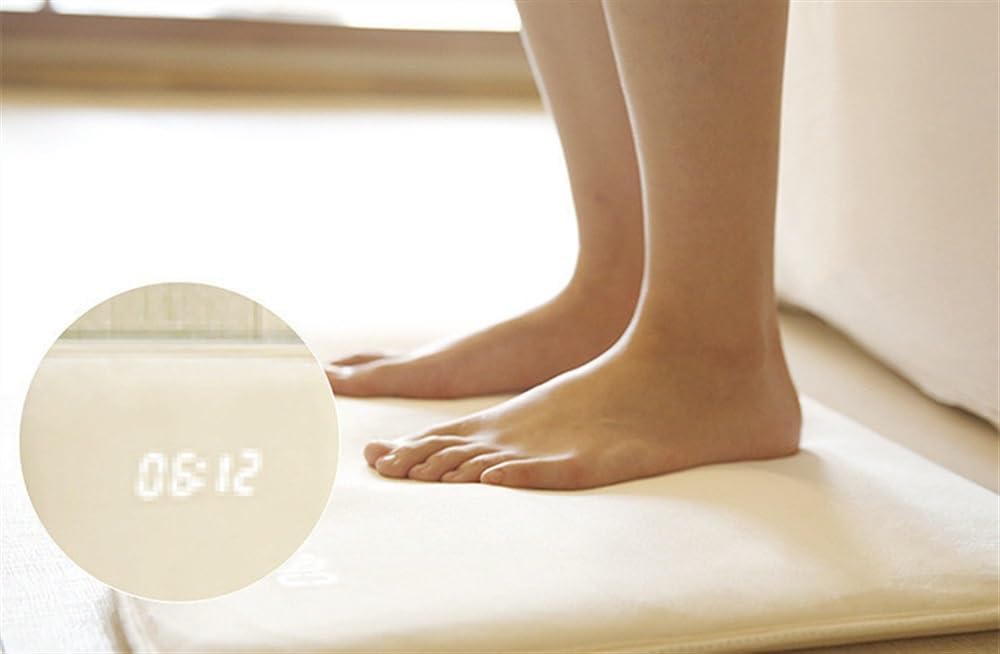
Ideal For: People Who Need a Built-In Physical Commitment to Stop Snoozing
Soft Carpet Alarm Clock is a memory foam floor mat with a built-in alarm. To turn it off, you have to stand on it for 3 seconds. There’s no button. There’s no snooze. You cannot turn it off from bed. Period.
Set it next to your bed so the first thing your foot hits when you throw back the covers is the mat. The moment you stand on it, your morning starts.
What Makes It Great for ADHD:
- Zero snooze option, no button to press while half-asleep.
- Requires physical commitment that jumpstarts your morning activation.
- Memory foam means it’s actually comfortable to stand on.
- Can play custom audio, motivational quotes, your favorite song, a personalized recording.
- USB charging port built in for convenience.
Potential Drawback: The alarm isn’t as loud as some of the others on this list — if you’re a deep sleeper, you might sleep through it before you ever get a chance to stand on it. Best paired with a light-based alarm or used by lighter sleepers.
5. Hatch Restore
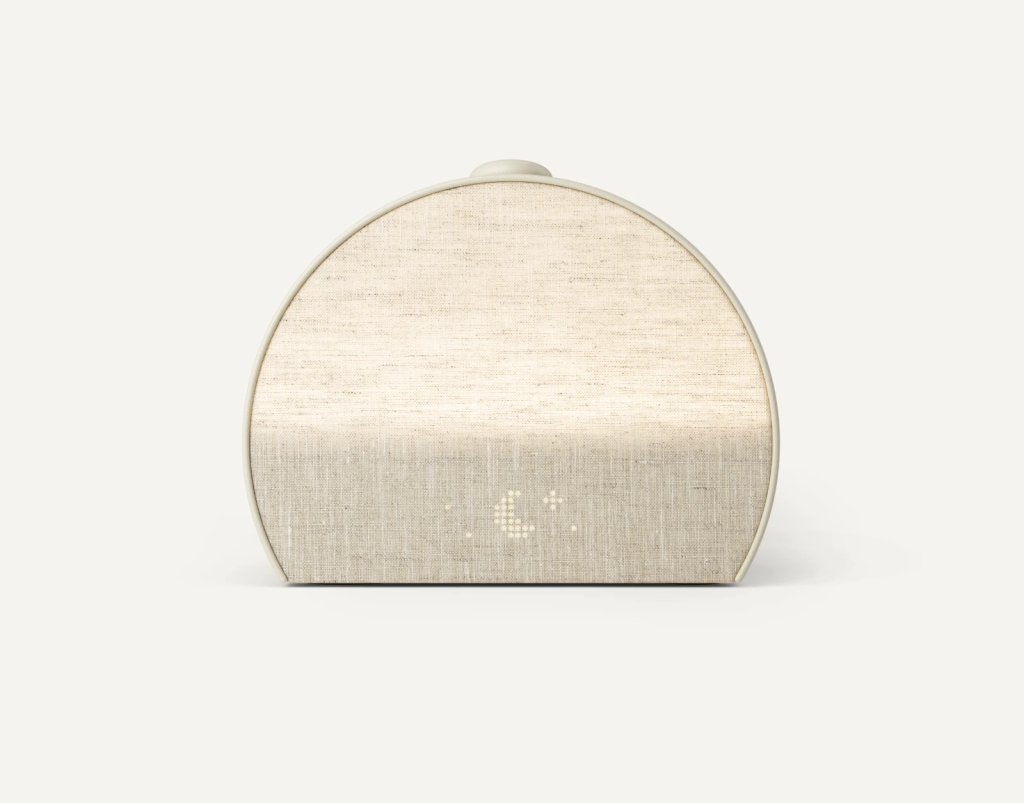
Best For: ADHD Adults Who Also Struggle With Sleep Onset at Night
The Hatch Restore is less of an alarm clock and more of a complete sleep system. It combines sunrise wake-up light, sleep sounds, meditation content, and a smart alarm — all controlled through a clean, intuitive app.
What makes it stand out for ADHD specifically is the bedtime routine feature. If you are serious about building a consistent morning routine around your alarm system, check out our guide on how to build a daily focus routine with ADHD — it pairs perfectly with what the Hatch Restore sets up each morning. You can build a visual, app-based routine that winds you down at the same time each night with dimming lights and calming sounds. This is huge for ADHD brains that struggle to transition from “doing mode” to “sleep mode.”
What Makes It Great for ADHD:
- Sunrise simulation with customizable brightness and duration.
- Built-in sleep sounds and guided meditations for racing thoughts at bedtime.
- App-based routine building, turns your wind-down into a visual, interactive system.
- “Rise” alarm: gradually brightens + plays a gentle tone before a louder backup kicks in.
- Elegant design that doesn’t feel clinical or overly gadgety.
Potential Drawback: Requires a subscription (Hatch+ at ~$5/month) to access most of the sleep content and routines. Without the subscription, it’s a solid but basic sunrise alarm. Also, it’s one of the more expensive options on this list.
Best For: ADHD adults who struggle with both falling asleep AND waking up — this addresses both ends of the problem.
If your ADHD affects both your nights and your mornings, the Hatch Restore 2 helps create structure on both ends of your sleep routine.
Start building a calmer nighttime routine tonight and make waking up feel less like a battle tomorrow morning.
6. Amazon Echo Show 5 (with Alexa Routines)
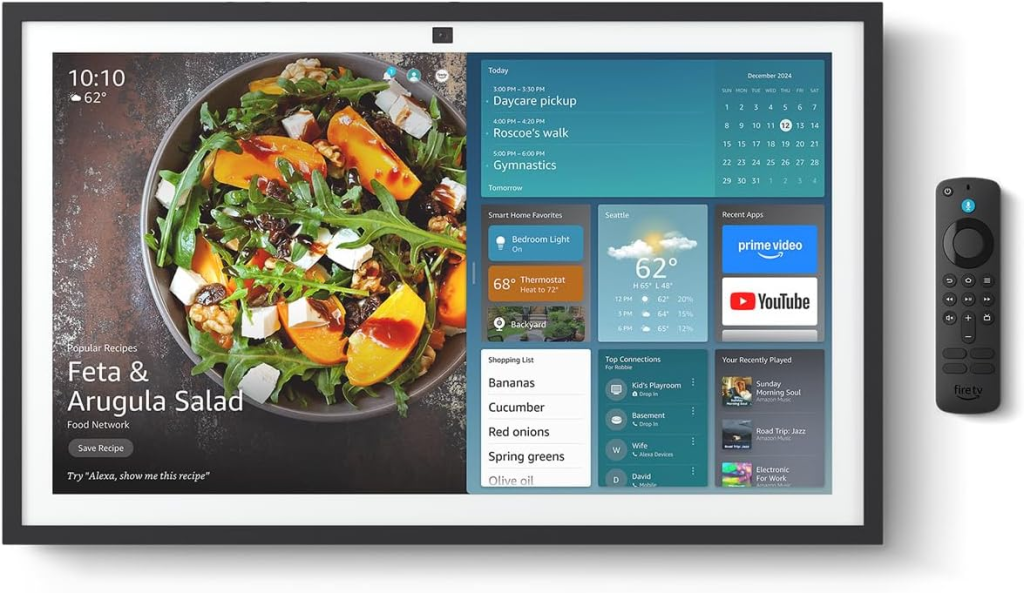
Ideal For: ADHD Planners Who Want a Smart, Customizable Morning System
The Echo Show 5 isn’t a dedicated alarm clock, but combined with Alexa Routines, it becomes one of the most customizable alarm systems for ADHD mornings available at this price point.
You can build a morning routine that triggers at your alarm time: lights turn on, a specific playlist starts, your calendar reads out your day’s agenda, and the screen displays your to-do list. For ADHD brains that go blank in the morning, having structure and information delivered automatically is genuinely game-changing.
What Makes It Great for ADHD:
- Alexa Routines let you automate your entire morning sequence, not just the wake-up.
- Voice-controlled, no fumbling with buttons while half-asleep.
- Can integrate with smart plugs to turn on lights, coffee makers, or anything else.
- The screen can display your calendar, weather, reminders, and immediate visual structure.
- Doubles as a bedtime tool: set routines to dim smart lights, play sleep sounds, remind you to take medication.
Potential Drawback: Requires reliable Wi-Fi and some initial setup time. If tech setup is a barrier for you, this may feel like too much friction. Also, the alarm itself isn’t uniquely ADHD-targeted — it’s the routines that make it powerful.
Best For: The ADHD planner who has the routine figured out in theory but needs a system to execute it automatically every morning. Pairing the Echo Show with a written time blocking system creates one of the most complete ADHD morning-to-workday transitions available.
If your mornings feel chaotic, rushed, or mentally scattered, the Echo Show 5 can help automate your routine so you don’t have to rely on memory or motivation first thing in the morning.
Set up one simple Alexa routine tonight and let your morning start with structure already in motion.
7. Pavlok 3
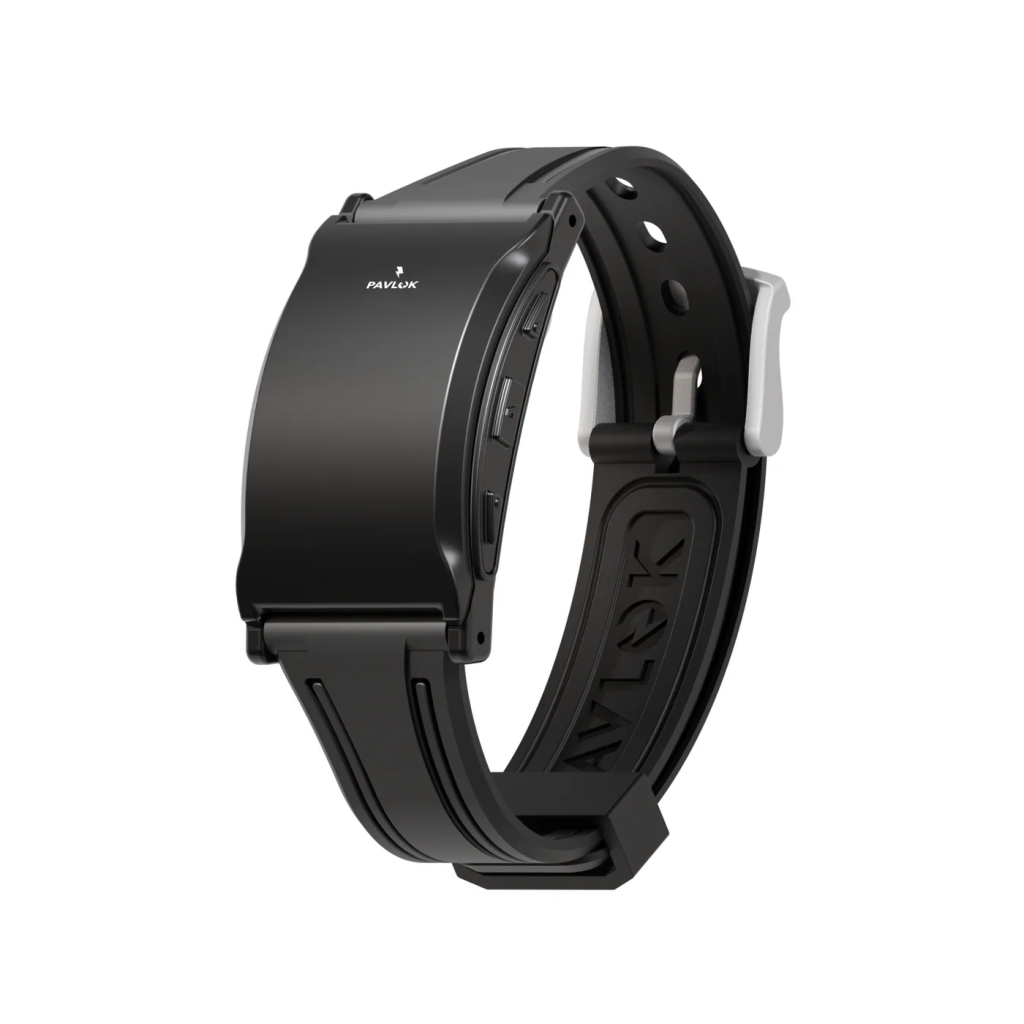
Best For: People Who Have Tried Everything Else and Need an Extreme Solution
Pavlok is a wearable wristband that wakes you up using vibration, beeping, and if you choose a mild electric stimulus. It pairs with an app that lets you set alarms and even gives other people the ability to “zap” you awake if you miss your alarm (yes, really it’s an optional feature for the chronically late).
The behavior-change science behind Pavlok is based on classical conditioning: your brain learns to associate the alarm with the vibration (and potential zap), making it much harder to ignore or rationalize back to sleep.
What Makes It Great for ADHD:
- Vibration directly on the wrist bypasses auditory processing issues, physically impossible to tune out.
- Electric stimulus option creates an undeniable physical response (mild, comparable to a static shock, not dangerous).
- The app includes habit-building tools and accountability features.
- The motion sensor detects if you’ve actually gotten out of bed.
- Accountability partner feature, another person can trigger it remotely if you miss an alarm.
Potential Drawback: The electric feature sounds extreme to a lot of people and genuinely isn’t for everyone but the vibration alone is effective for most users. The app can also be buggy. This is the “last resort” option, not the first.
Best For: Someone who has genuinely exhausted every other option and needs something that gives them no choice.
If you’ve genuinely tried everything and still cannot wake up consistently, Pavlok gives your brain a physical reason to stop ignoring alarms.
Start with the vibration setting first and see how much harder it becomes to sleep through your mornings.
Quick Comparison Table
| Alarm System | Type | Best For | Price Range | ADHD Feature |
| Sonic Alert Sonic Bomb | Sound + Bed Shaker | Deep sleepers | $$ | 113dB + physical vibration |
| Clocky on Wheels | Moving Alarm | Chronic snoozers | $ | Forces you to chase it |
| Lumie Bodyclock Shine 300 | Sunrise Light | Brain fog / anxiety | $$$$ | Clinically studied sunrise |
| Ruggie Alarm Mat | Floor Mat | Habit anchoring | $$ | Must stand to stop alarm |
| Hatch Restore 2 | Smart Sleep System | Sleep + wake issues | $$$$ | Full sleep routine system |
| Amazon Echo Show 5 | Smart Speaker | Morning routine builders | $$ | Fully automated routines |
| Pavlok 3 | Wearable | Extreme cases | $$$ | Vibration + optional zap |
How to Stick With Your New Alarm System
Even the best alarm systems for ADHD mornings won’t help if you set them up and never build a habit around them. Here’s how to make it stick.
1. Place your alarm physically out of reach. This is non-negotiable. An alarm you can silence without moving is an alarm you will silence without moving. Put it across the room. On top of your dresser. On the floor by the bathroom door. Movement breaks the sleep inertia.
2. Pair your alarm with one automatic first action. When the alarm goes off, your only job is to do one thing, drink a glass of water you prepped the night before, put on slippers, and press start on the coffee maker. One automatic action anchors your morning and bridges the gap between alarm and being actually awake. For more on building habits that stick without relying on motivation, check out our discipline system guide — it applies directly to morning routine building.
3. Don’t rely on one alarm method. Stack them. Use a sunrise clock that starts 20 minutes early AND a loud backup at your actual wake time. Or Clocky on the floor AND an Echo Show reading your calendar. ADHD brains respond better to layered systems.
4. Give yourself a two-week trial, not a two-day one. Your brain needs repetition to rewire. Don’t declare a new alarm system a failure after three days. Commit to two weeks before you decide it isn’t working.
5. Set your alarm time before you’re sleepy. Decision-making at 11 PM when you’re exhausted leads to 9 AM wake times you’ll blow through. Plan your alarm time earlier in the day when your executive function is sharper.
Frequently Asked Questions
Why do people with ADHD struggle to wake up more than others? ADHD affects the brain’s dopamine and norepinephrine systems, which regulate alertness and the sleep-wake cycle. Many people with ADHD experience delayed sleep phase syndrome, meaning their circadian rhythm naturally runs later than the average person’s. This makes early mornings neurologically harder — not just a discipline issue.
Is snoozing worse for ADHD than for neurotypical people? Yes, and the research backs this up. Snoozing interrupts your sleep cycle and can increase sleep inertia — that groggy, foggy feeling after waking. For ADHD brains that are already slow to transition out of sleep, hitting snooze makes that transition worse. Going no-snooze is hard but genuinely worth it.
Can alarm systems ADHD morning routines replace medication? No. A good alarm system is a practical tool that supports your morning — it doesn’t address the underlying neurological differences that ADHD involves. If mornings are severely affecting your quality of life, speak with your doctor or psychiatrist about comprehensive ADHD management.
What’s the single best alarm system for someone who sleeps through everything? The Sonic Alert Sonic Bomb with bed shaker is the most consistently effective solution for true deep sleepers. The combination of 113dB sound and physical mattress vibration is extremely difficult to sleep through. Pair it with a sunrise clock starting 30 minutes earlier for even better results.
Should I use a phone alarm or a dedicated alarm clock? Dedicated alarm clocks are generally more reliable for ADHD mornings. Phone alarms are too easy to dismiss, accidentally silenced by Do Not Disturb settings, or derailed by a dead battery. A dedicated device removes those variables. That said, the Amazon Echo with Alexa Routines bridges the gap well if you’re committed to setup.
My Final Thoughts
I’ve heard people often say ADHD is a superpower. And I believe it is when you can control it. But, it often really really sucks because it affects my everyday life every single day and every aspect of my day.
No matter how confident or motivated you were about your plan to wake up early or your new morning routine, you somehow manage to screw it up in the morning. At least that has been me over and over again. It has gotten way easier over time, but I know the pain.
Doesn’t matter what alarm you end up getting, the thing is that you have to keep trying and experimenting until your brain understands, aka you, that getting up early is important.
The more you keep working on this as “consistently” – if you give up or lose track, just start again and again- as much as possible, the more you will understand yourself, your priorities, and if you should even be waking up early or look to change your schedule or career. It’s all about continued self-improvement in order to get to know what you truly want and what you need in order to get there.
The thing about ADHD is that when something becomes a goal or priority, everything else becomes one too. Suddenly, everything feels like an urgency and something that needs fixing or improvement because it relates to your new focus or priority.
Which is what makes waking up early sooo exhausting. Your brain starts juggling everything that it has to do before even getting up, and that creates a horrible, exhausting, groggy feeling.
Get the alarm that you think will work best for you, get the best sleep possible, and only get up early when you know you have a real commitment. For example, taking your kids to school, showing up to work at a certain time or a specific meeting. Forget about what you didn’t do, want to do, or need to do. You’re just fighting your brain for no reason.
If it needs to get done, it will get done. Learn to let go. The more you learn this, the more you will gain more power and especially more CLARITY. Which will make it easier for your brain(you) to take action.
The right alarm system for your ADHD morning isn’t the one with the best reviews, it’s the one that matches how your brain works in the morning.
Morning routines don’t have to be a daily battle. Pick the tool that removes the friction, set it up tonight, and give it two weeks. You might just surprise yourself. And when you’re ready to build the full routine around your new alarm, start with our guide on how to build a morning routine with ADHD — it covers everything from the moment your alarm goes off to sitting down ready for your first focus session.
Ready to wake up without the war? Pick the alarm system that fits your ADHD morning style, set it up tonight, and come back and let us know how it went. You’ve got this.