Mastering the Small Stuff: The Key to Success
The key to success is not what most people think it is. It is not talent, luck, or one big breakthrough decision….
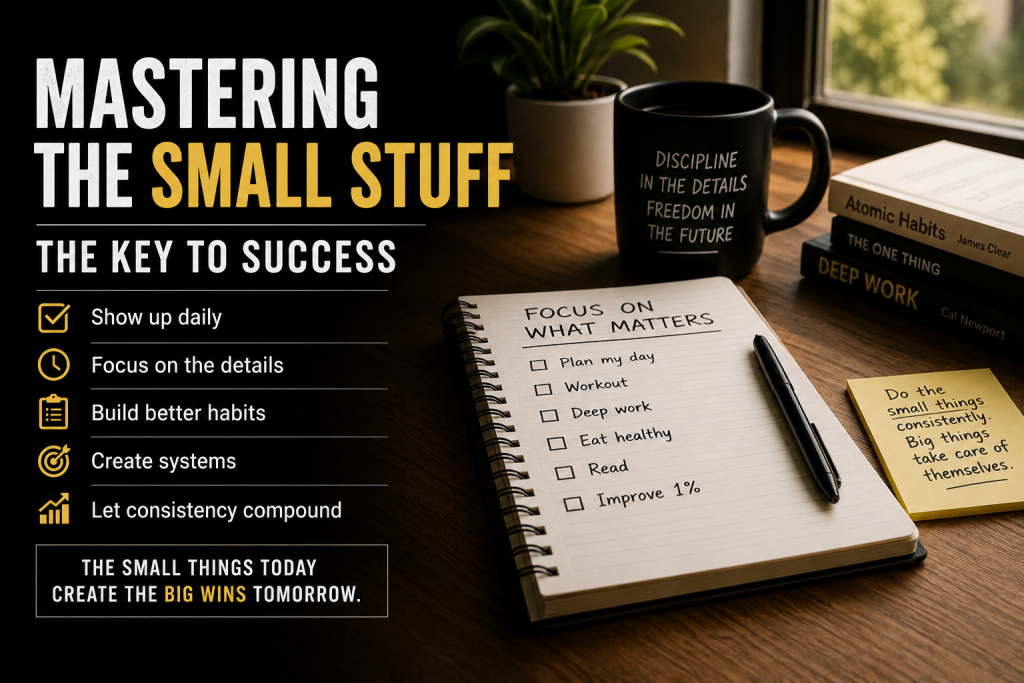
The key to success is not what most people think it is. It is not talent, luck, or one big breakthrough decision.
We all dream about achieving big goals.
Starting a business.
Getting in shape.
Building wealth.
Learning a new skill.
The exciting part is imagining the end result.
The hard part is showing up for all the little things that make those goals possible.
Cleaning your workspace.
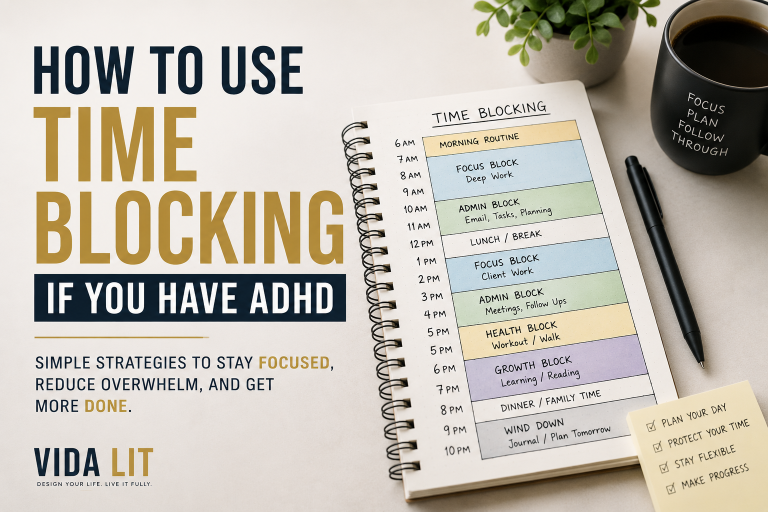
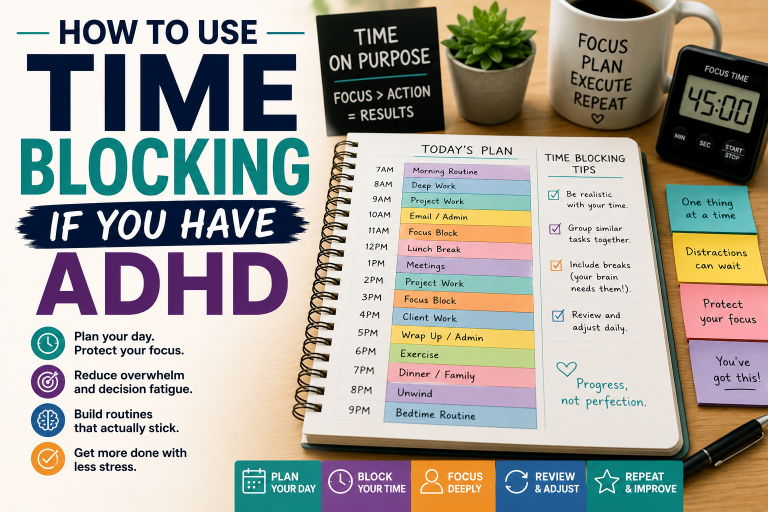
Preparing tomorrow’s checklist.
Stretching before your workout.
Reading the instructions instead of rushing ahead.
Going to bed on time.
None of these things are exciting. They’re easy to skip because they don’t feel like progress. But over time, these small actions become the foundation for everything else.
Why the small things feel skippable — and why that feeling lies to you
The small things feel skippable for a simple reason: they do not pay off today. Cleaning your desk does not build the business. Laying out your clothes does not make you fit. Writing tomorrow’s checklist does not finish the project. So your brain files all of it under “later,” and later never comes.
That is the trap. We judge a small action by what it does on its own, instead of what it does to tomorrow. A clean desk does not write the report — but it removes the ten minutes of friction that usually stops you from starting the report. A checklist does not do the work — but it stops you from spending the first hour of your day deciding what the work even is. The small thing is rarely the achievement. It is the thing that makes the achievement possible.
Ask yourself this honestly: how many times have you actually failed at the big thing, and how many times did you just never set it up properly? Most of the time, it is the second one. We did not fail. We skipped the setup, got overwhelmed, and then called it a lack of motivation.
One lesson I’ve learned is that discipline lives in the details. Discipline is built there too.
This is the same idea behind how to be disciplined without motivation. Discipline is not a feeling you summon, it is the result of small fundamentals done consistently, whether you feel like it or not.
When we chase only the exciting parts of our goals, we often overlook the habits and systems that actually determine whether we’ll succeed. We want results now, so we jump straight into the difficult work without preparing ourselves.
Eventually, we become overwhelmed, lose momentum, and convince ourselves we lack motivation when, in reality, we skip the fundamentals. This is exactly what making hard things easy is about. The fundamentals feel small and skippable, but they are the entire reason the hard things eventually become easy.
Pick one small thing, not ten
Here is where most people go wrong with this idea: they turn “master the small stuff” into a list of twenty new habits, try all of them on Monday, and quit by Wednesday. That is just the big-goal mistake in a smaller costume.
Do the opposite. Pick one small thing. Just one. The one that would make tomorrow easiest.
If mornings are your problem, your one thing is preparing tomorrow’s checklist before bed. Not a perfect system — three lines on paper. If work keeps stalling, your one thing is cleaning your desk before you start. If evenings fall apart, your one thing is going to bed on time, even if the day felt unfinished.
Do that one thing for a week. Not forever — a week. If it actually makes your days easier, keep it and then, only then, add a second one. If it does not, drop it without guilt and pick a different one. You are not building a perfect routine. You are testing what actually helps you show up.
Small things, by part of the day
You do not need a new life. You need a few small setups, placed where your day usually breaks down.
The night before. This is the most powerful small window you have, because it costs you five minutes and saves you the whole next morning. Write tomorrow’s top three things. Lay out what you need. Decide once, tonight, so tomorrow’s tired self does not have to negotiate with itself. This is where making one-time decisions pays off — deciding once what deserves your energy means you stop wasting willpower renegotiating the same small choices every single day.
The start of work. Clear the desk. Open the one thing you are working on first. Read the instructions instead of rushing ahead. Starting clean is not about being tidy for its own sake — it is about removing every small excuse to delay. A cluttered desk, an uncharged laptop, a missing password: each one is small, and together they are the reason you never started.
The end of the day. Stretch before your workout, or after it. Put things back where they belong. Write down what is unfinished so it stops looping in your head all evening. Going to bed on time is a small thing too, and it is the one that decides whether tomorrow’s small things happen at all.
None of this is glamorous. That is the point. The unglamorous setup is what lets the glamorous goal happen.
Whether you’re trying to build a business, improve your health, or create a better life, ask yourself:
What are the small things that make success easier?
Maybe it’s:
- Preparing tomorrow’s checklist before bed.
- Laying out your workout clothes the night before.
- Cleaning your desk before starting work.
- Saying no to commitments that don’t support your goals.
- Finding an accountability partner.
- Automating or eliminating repetitive tasks.
This is where making one time life changing decisions becomes so powerful. Deciding once what deserves your energy means you stop wasting willpower renegotiating the same small choices every single day.
These actions might seem insignificant on their own, but together they create an environment where success becomes much more likely.
The small things aren’t separate from the goal.
They are the goal.
When you miss a day, shrink — don’t restart
You will miss a day. Everyone does. The mistake is treating a missed day like a failed system and starting over from zero with a bigger plan. That is how small habits die.
When you miss, shrink the habit instead of restarting it. Didn’t clean the whole desk? Clear one corner. Didn’t write the full checklist? Write one line: the first thing tomorrow. Didn’t work out? Stretch for two minutes. The goal on a bad day is not progress. It is keeping the thread alive, so tomorrow is a continuation instead of a fresh start.
This is the same idea as making your next healthy habit smaller. A habit you can do on your worst day is a habit that survives. A habit that only works on a perfect day is not a habit at all — it is a wish.
Try it for seven days, smaller than you think you need to: Day 1, write tomorrow’s three things before bed. Day 2, clear your desk before work. Day 3, lay out tomorrow’s clothes tonight. Day 4, say no to one thing that does not support your goals. Day 5, go to bed on time. Day 6, automate or eliminate one repetitive task. Day 7, look back and keep only the ones that actually made your week easier. That is your system — not one you copied, one you tested.
That is the real key to success, nobody wants to hear. It is not glamorous, it is just consistent.
Master the fundamentals, and the bigger victories have a chance to follow.
Most people underestimate how much easier life becomes when they stop relying on motivation and start building systems. The small things may not feel important today, but they’re often the reason you’re able to show up tomorrow.
The key to success isn’t one big decision, it’s hundreds of small ones made consistently.
James Clear built an entire philosophy around this in Atomic Habits. The idea that tiny improvements repeated daily compound into remarkable results over time.
Now, my friend, look in the mirror. That person you’re looking at is your future telling you to prepare now for a better tomorrow.